Smart Patio Examples: The 2026 Definitive Guide to Outdoor Automation
The traditional American patio is a static architectural element—a slab of masonry or a deck of timber designed to provide a level surface for seasonal leisure. However, the current era of residential engineering has reimagined the patio as a dynamic, software-defined volume. This transition marks the end of the patio as a passive observer of the weather and the beginning of its role as an autonomous extension of the home’s interior climate and social ecosystem.
Integrating high-level automation into an outdoor living space is not an exercise in adding gadgets, but a fundamental shift in infrastructure. Unlike the controlled environment of a living room, the “smart” patio must operate within a chaotic set of variables: shifting UV indices, fluctuating barometric pressure, and the physical degradation caused by environmental exposure. Consequently, the planning phase for such a space requires a shift from decorative thinking to systemic thinking. We are no longer just choosing furniture; we are designing a reactive interface between human activity and the natural world.
As we look toward the 2026-2030 horizon, the most sophisticated smart patio examples are defined by their invisibility. The goal is a “Zero-UI” experience where the environment adjusts to the occupant without the need for a smartphone app or voice command. This article serves as a flagship reference for the conceptualization and execution of these high-performance exterior environments.
Understanding “smart patio examples”
To properly categorize smart patio examples, one must move past the consumer-grade “plug-and-play” mindset. In a senior editorial context, a “smart patio” is an integrated system where disparate components—lighting, climate control, irrigation, and security—share a common logic layer. A common misunderstanding is that a patio with a smart bulb and a Bluetooth speaker qualifies as an automated space. In reality, that is merely a “connected” space.
A professional-grade smart patio example is defined by three primary criteria:
-
Contextual Awareness: The system “knows” the difference between a rainy afternoon and a sunset, adjusting the louvered roof and accent lighting accordingly without human input.
-
Interoperability: The motorized shades do not operate in a vacuum; they communicate with the HVAC system to reduce the heat load on the home’s interior glass walls.
-
Resilience: The system utilizes local edge-computing to ensure that if the internet fails, the critical safety features (like fire-pit emergency shut-offs or wind-sensitive awning retractions) remain functional.
Oversimplification in this domain often leads to “technical debt”—where a homeowner buys three different apps for three different devices, only to find that the “automation” requires more manual effort than the analog version it replaced. A flagship example demonstrates the removal of the user from the control loop, allowing the space to transition from a bright morning breakfast nook to a moody, heated evening lounge with the subtlety of a cinematic cross-fade.
Contextual Evolution: From Stone Slabs to Programmable Volumes
The history of the patio is a story of the gradual dissolution of the wall. By the early 2000s, the “outdoor room” concept began to take hold, introducing high-end appliances and comfortable seating. However, these spaces remained functionally static.
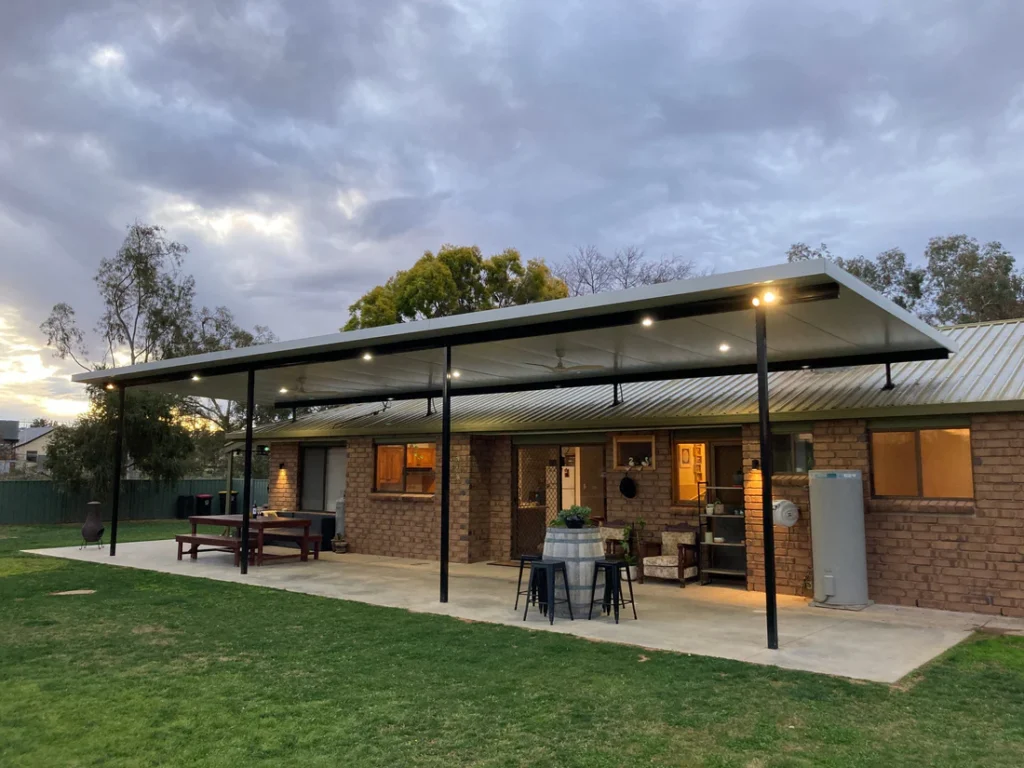
This design philosophy uses technology to manipulate the micro-climate of the patio. In the 2026 market, we see the rise of the “Bioclimatic Pergola”—a structure with motorized louvers that can track the sun for optimal shade, close completely during rain, and open to allow heat to escape on summer nights.
We have transitioned from mechanical control (opening an umbrella) to digital control (pressing a button) to autonomous management (the system tracking the 48-hour weather forecast). This shift has turned the patio from a seasonal luxury into a 365-day-a-year functional asset, effectively increasing the usable square footage of the property without the need for a traditional home addition.
Conceptual Frameworks and Mental Models
When evaluating smart patio examples, three frameworks help organize the complexity:
1. The “Skin and Core” Model
This model treats the patio as a biological entity. The “Core” is the hardscape and infrastructure (conduit, drainage, high-voltage lines), while the “Skin” is the tech layer (sensors, motorized screens, LED arrays).
2. The “Thermal Buffer” Framework
Instead of viewing the patio as a separate zone, this model views it as a buffer for the main house. By automating exterior shades and misting systems, the patio can reduce the ambient temperature near the home’s windows by up to 15 degrees, significantly lowering the indoor cooling load.
3. The “Invisibility” Threshold
A system’s quality is inversely proportional to how often it is noticed. This framework prioritizes sensors over switches. If the occupant has to reach for their phone to dim the lights, the design has failed the “Invisibility” test.
Key Categories of Smart Patio Integration
The landscape of modern patio technology can be divided into several high-impact categories, each requiring a specific architectural approach.
| Category | Typical Components | Primary Benefit | Logic Trigger |
| Climate Modulation | Motorized louvers, IR heaters, Misting lines | Year-round usability | Temp + Barometric Pressure |
| Circadian Illumination | High-CRI Tunable LEDs, Path lights | Wellness & Safety | Astronomical Clock |
| Acoustic Immersion | DSP-controlled bollard speakers, Subwoofers | Atmospheric control | Occupancy / Scene Selection |
| Resource Stewardship | Smart irrigation, Leak detection | Conservation | Soil Moisture / Flow Meter |
| Boundary Dissolution | Retractable glass walls, Screens | Seamless transition | Interior HVAC demand |
| Security & Logic | AI-vision cameras, Presence sensors | Safety & Automation | Person/Object Recognition |
The “Silo” Decision Logic
When choosing between smart patio examples, the most successful implementations follow a “siloed-but-bridged” logic. This means each sub-system (like lighting or audio) should be able to run independently on its own controller, but they should all report to a central “Bridge” (like a Matter hub) to coordinate multi-system scenes.
Real-World Scenarios: From Minimalist to Maximum-Utility
Scenario 1: The “Invisible” Minimalist Retreat
-
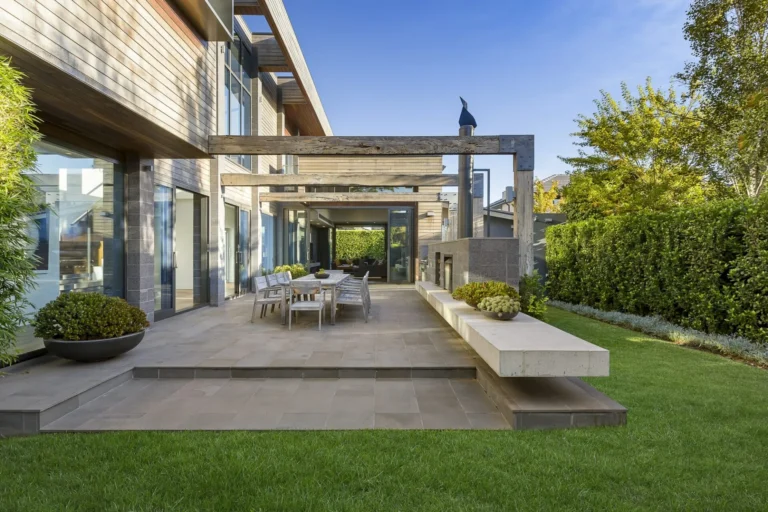
Concept: A clean, stone patio with no visible technology.
-
Execution: Speakers are hidden in “rock” enclosures or under-deck vibration plates. Lighting is recessed into the masonry joints. Sensors are hidden in the foliage.
-
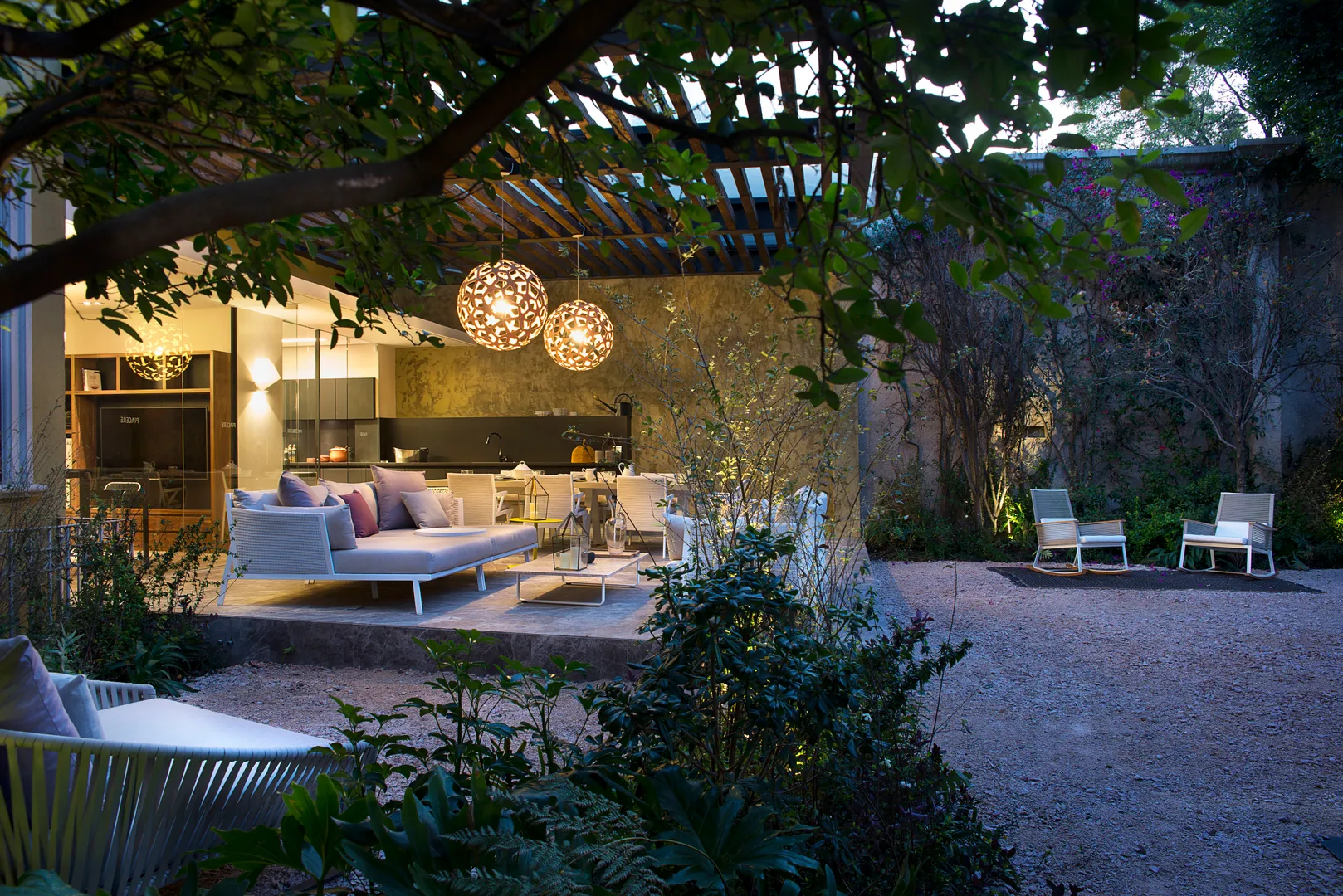
Smart Logic: When the sliding glass door opens, the system detects “Homeowner Presence” and slowly fades in the floor-wash lighting and a low-volume ambient playlist.
Scenario 2: The “Culinary Powerhouse”
-
Concept: A professional-grade outdoor kitchen designed for hosting.
-
Execution: Smart grills with internal probes, automated ventilation hoods that kick in when smoke is detected, and task lighting that intensifies when the grill lid is opened.
-
Smart Logic: A “Party” scene that syncs the outdoor audio with the indoor audio, increases the perimeter lighting for safety, and activates the mosquito-repellant misting system.
Scenario 3: The “Bioclimatic” Multi-Season Hub
-
Concept: A space that remains comfortable in both the Arizona desert and the Seattle rain.
-
Execution: A pergola with sensors that close the roof at the first drop of rain and open it when the sun comes out.
Economic Dynamics: The Total Cost of Ownership (TCO)
The financial planning for a smart patio must account for more than the “sticker price” of the hardware. In 2026, the industry uses a TCO model that looks at the 10-year lifespan of the installation.
| Investment Tier | Typical Scale | Acquisition Cost | Annual Opex (Energy/Subs) |
| DIY / Mid-Range | 200 sq ft | $5,000 – $15,000 | $200 – $500 |
| Professional Integrated | 500 sq ft | $30,000 – $75,000 | $500 – $1,200 |
| Enterprise / Estate | >1,000 sq ft | $150,000+ | $2,000+ |
Opportunity Cost: The biggest hidden cost is “Technical Obsolescence.” Choosing a proprietary, cloud-only system (where the hardware stops working if the company goes out of business) represents a significant risk. Professional smart patio examples always prioritize local-control protocols to protect the long-term investment.
Tools, Strategies, and Support Ecosystems
Building a flagship patio requires a toolkit that spans several engineering disciplines:
-
Astronomical Offsets: Programming the lighting to turn on 15 minutes before sunset, rather than at a fixed time.
-
Colorimeters: Used during commissioning to ensure the outdoor “tunable white” LEDs match the color temperature of the interior kitchen lights exactly.
-
Acoustic Analysis: Using a sound-pressure-level meter to ensure the audio is contained within the property lines, avoiding neighbor disputes.
-
IP-Rated Enclosures: Ensuring all controllers are housed in NEMA-standard boxes to prevent “Corrosion Fatigue” in humid environments.
-
VLAN Segmentation: Keeping the patio “IoT” devices on a separate virtual network from the home’s primary computers to enhance cybersecurity.
The Risk Landscape: Failure Modes and Security
The outdoors is a hostile environment for silicon and copper. A resilient plan must account for:
-
Signal Shading: As trees grow and their canopy densifies, Wi-Fi or Zigbee signals can be blocked. Planning for “Over-Provisioned” mesh nodes is critical.
-
Thermal Cycling: Components in a pergola can reach 140°F in the summer and sub-zero in the winter. Industrial-grade hardware is mandatory.
-
False Triggers: A raccoon or a swaying branch can trigger motion sensors. Advanced systems use “AI Filtering” to ignore non-human movement.
Governance, Maintenance, and Long-Term Adaptation
A smart patio is a “living” system. It requires a maintenance hierarchy to ensure performance:
The Quarterly Checklist
-
Louver Lubrication: Ensuring the motorized roof operates silently.
-
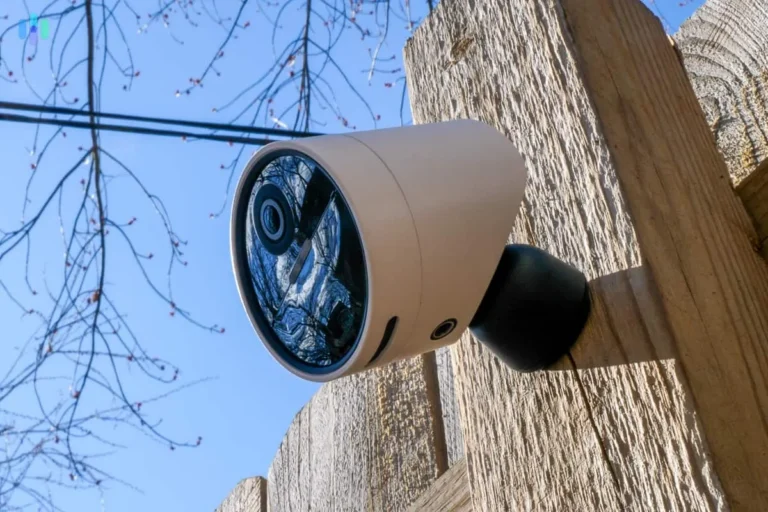
Lens Cleaning: Wiping down occupancy sensors and camera lenses to prevent “Visual Drift.”
-
Firmware Audit: Updating controllers to the latest security patches.
The Seasonal Adjustment
-
Irrigation Recalibration: Adjusting soil moisture thresholds for the winter dormancy period.
-
Heat-Element Test: Ensuring IR heaters are clear of debris before the first cold snap.
Common Misconceptions and Industry Myths
-
“Wireless means no wires.” Almost all smart patio examples require high-voltage power lines. “Wireless” refers to the control signal, not the power source.
-
“Automation is a privacy nightmare.” Local-only processing means your patio data never leaves your home.
-
“Solar-powered tech is enough.” In many climates, solar-powered sensors lack the wattage for consistent 24/7 connectivity. Hard-wired power is still the gold standard for luxury builds.
-
“I can just use indoor gear in a cabinet.” Humidity will destroy indoor electronics in months, regardless of the cabinet quality. Use IP65-rated hardware.
Conclusion: The Future of External Living
The transition from a passive patio to an intelligent exterior ecosystem is a hallmark of modern architecture. By analyzing the best smart patio examples, we see a future where the home doesn’t end at the back door.
Ultimately, the smartest patio is not the one with the most screens, but the one that allows its occupants to forget the technology exists entirely—letting the light, the heat, and the music follow the movement of life itself.