Outdoor Sensor Overview: The 2026 Editorial Guide to Exterior Logic
The transition of the domestic exterior from a passive landscape to a responsive, data-driven environment represents one of the most significant shifts in modern architectural engineering. Traditionally, the management of a property’s perimeter—gardens, hardscapes, and entryways—relied upon human observation and manual intervention. However, the maturation of edge-computing and the proliferation of low-power mesh networking have enabled the deployment of sophisticated sensor arrays that function as the central nervous system of the estate. This integration is no longer a matter of mere convenience; it is a structural response to the requirements of resource conservation, perimeter security, and the preservation of biological health in an increasingly volatile climate.
Engineering a sensor network for the outdoors requires a fundamental departure from the controlled logic of interior automation. Within the home, sensors operate in a stable, climate-regulated vacuum. Outside, these same devices must contend with an entropic environment defined by extreme thermal cycling, UV-induced material degradation, and the physical interference of local flora and fauna. To build a resilient network, one must move past the consumer-grade hardware of the previous decade and adopt an industrial-grade perspective on hardware longevity and signal integrity. The goal is to establish a system that remains entirely invisible, providing high-fidelity data that allows the property to manage itself autonomously.
As we move toward 2030, the sophistication of an exterior is measured by the “Granularity of its Perception.” It is no longer sufficient for a system to simply detect movement or light. The flagship landscapes of 2026 utilize multi-spectral sensors to distinguish between a swaying branch and a human intruder, or between surface-level soil dampness and deep-root saturation. This article serves as a definitive reference for this technological landscape, providing a rigorous analysis of the sensors, protocols, and governance strategies required to maintain a high-performance outdoor ecosystem.
Outdoor sensor overview
Engaging with an outdoor sensor overview necessitates a shift in perspective from “buying gadgets” to “designing a data layer.” In a professional editorial context, a sensor is not a standalone tool but a node within a broader decision-making engine. A common misunderstanding in the residential market is the belief that “more is better.” In reality, a high-density deployment of low-quality sensors creates “data noise,” leading to false triggers in security systems or over-watering in irrigation cycles. A flagship-level overview prioritizes the quality of the signal and the resilience of the physical housing.
A professional sensing strategy is defined by three distinct layers:
-
The Perception Layer: The physical hardware—capacitive soil probes, passive infrared (PIR) modules, ultrasonic flow meters, and barometric altimeters—that converts environmental stimuli into digital signals.
-
The Transport Layer: The communication protocols (e.g., Matter-over-Thread, LoRaWAN, or hard-wired RS-485) that ensure the data reaches the controller despite physical obstacles or distance.
-
The Logic Layer: The software-defined rules that interpret the data. For example, a “smart” system does not turn on the lights just because it sees motion; it verifies the light level via a photocell and checks the astronomical clock before executing the command.
Oversimplification in this domain often ignores the “Environmental Tax” paid by outdoor hardware. Professional outdoor sensor overview documentation emphasizes Ingress Protection (IP) ratings and the chemical stability of the plastics used. A sensor that performs perfectly in a laboratory may fail within six months in a coastal environment due to salinity or in the Southwest due to heat-soak. The objective is to build a “silent operator”—a system that monitors the property with absolute fidelity, allowing the owner to transition from an “active maintainer” to a “strategic overseer.”
Contextual Evolution: From Mechanical Switches to Multi-Spectral Logic
The lineage of the outdoor sensor begins with the mechanical “tripwire” and the mercury-switched light. These early iterations were binary and brittle; they could tell you if a gate was open, but they could not provide the nuance required for autonomous management. The 1980s saw the introduction of the first generation of PIR (Passive Infrared) sensors, which revolutionized security lighting but were famously plagued by false positives caused by pets or wind-blown debris.

The 1990s and early 2000s marked the “Connected Era,” where sensors began to communicate over rudimentary wireless frequencies. However, these were largely “siloed” systems. Your irrigation rain sensor had no awareness of your security cameras, and your driveway gate sensor was oblivious to your outdoor audio system. This fragmentation led to “Notification Fatigue,” where property owners were bombarded with disparate alerts that lacked contextual cohesion.
By 2026, we have reached the “Integrative Era.” With the maturation of unified protocols like Matter, the outdoor sensor has become a “context-aware” node. Modern soil sensors don’t just measure moisture; they measure mineral salinity and temperature, feeding data into a cloud-based agronomic model. Security sensors now use AI-at-the-edge to identify specific objects—distinguishing between a delivery driver and a stray animal. We have moved from simple detection to sophisticated environmental interpretation.
Conceptual Frameworks and Mental Models
When planning a sensor-dense exterior, several mental models help organize the complexity and prevent systemic failure:
1. The “Resilient Mesh” Framework
In the outdoors, a single point of failure is a guarantee of eventual system blackout. This framework dictates that sensors should utilize “Self-Healing Mesh” networks. If a shrub grows over one sensor node and weakens its signal, the data should automatically re-route through a neighboring node to reach the central gateway.
2. The “Biological Priority” Logic
Technology must be the servant of biology. If a sensor suggests that the lawn is dry, but the local weather station indicates a 90% probability of rain within two hours, the “Biological Logic” should override the hardware trigger to prevent over-saturation and nutrient runoff.
3. The “Detection-to-Action” Chain (DAC)
Every sensor deployment must have a pre-defined DAC. If a sensor detects a variable (Detection), how is that data filtered (Analysis), and what is the physical result (Action)?
Key Categories of Environmental and Security Sensors
The choice of sensor technology dictates the long-term utility of the installation. The following table highlights the core categories of exterior sensing and the trade-offs inherent in their physics.
| Sensor Category | Detection Method | Primary Utility | Primary Trade-off |
| Soil Capacitance | Electrical permittivity | Precision Irrigation | Requires precise burial depth |
| Passive Infrared (PIR) | Heat signature change | Security Lighting | Blind to non-thermal movement |
| Ultrasonic Flow | Sound wave deflection | Leak detection | Sensitive to pipe vibration |
| Optical AI-Vision | Pixel-pattern recognition | Person/Object ID | High data/power demand |
| Photocell/Ambient | Resistance to light | Circadian lighting | Can be fooled by glare |
| Barometric Pressure | Atmospheric weight | Hyper-local weather | Requires frequent calibration |
| Acoustic Glass-Break | Frequency analysis | Perimeter security | False triggers from thunder |
Decision Logic: Wired vs. Wireless
The realistic logic for most estates favors a “Hybrid Backbone.” Peripheral sensors, such as those in flower beds or remote fence lines, can utilize low-power wireless protocols (LoRaWAN or Thread) to save on trenching costs.
Detailed Real-World Scenarios
Scenario 1: The “Smart Harvest” Estate
-
Challenge: Managing a high-yield home orchard in a region with unpredictable frost.
-
Implementation: A network of barometric and high-accuracy temperature sensors at the canopy level.
-
Logic: When the sensor detects a specific pressure drop and temperature dip, it automatically activates “Frost Protection” (circulating water or activating infrared heaters).
-
Failure Mode: A sensor becomes “shielded” by dense foliage, reporting a warmer temperature than the exposed fruit.
-
Resolution: Implementing “Differential Sensing,” where multiple nodes are averaged to find the true micro-climate state.
Scenario 2: The Urban Privacy Buffer
-
Challenge: Maximizing the use of a streetside patio without constant interruption from false security alerts.
-
Implementation: Dual-technology sensors (PIR + Microwave) integrated with AI-vision cameras.
-
Logic: The PIR detects heat; the Microwave verifies movement; the AI identifies the movement as “Traffic” rather than “Entry.”
Scenario 3: The “Zero-Waste” Coastal Landscape
-
Challenge: High salinity and rapid evaporation make traditional irrigation schedules impossible.
-
Implementation: Multi-depth capacitive soil probes that measure “Volumetric Water Content” (VWC) and salinity levels.
-
Second-Order Effect: The system detects a spike in salinity after a storm surge and automatically triggers a “Fresh-Water Flush” to protect the roots.
Planning, Cost, and Resource Dynamics
The economic architecture of an outdoor sensor network is characterized by “Strategic CapEx.” While the individual sensors may be relatively inexpensive, the infrastructure to support them—conduit, power, and data backhaul—represents the bulk of the investment.
Estimated Investment Tiers (2026 Standards)
| Tier | Scale | Infrastructure | Estimated Cost (USD) |
| Standard | Single Zone (Patio) | Wi-Fi / Battery | $500 – $1,500 |
| Professional | Integrated Yard (0.5 Acre) | Matter / Mesh / Solar | $5,000 – $15,000 |
| Estate | Full Autonomy (>1 Acre) | Hard-wired / PoE / LoRa | $30,000 – $80,000+ |
Opportunity Cost: The primary hidden cost is “Data Fragility.” Using consumer-grade sensors that rely on a manufacturer’s cloud server means that if the company goes bankrupt, the sensors become useless. A professional installation prioritizes “Local-First” data control, ensuring the property remains autonomous regardless of the manufacturer’s fate.
Tools, Strategies, and Support Systems
A flagship sensor network is only as strong as its foundation. A professional-grade system requires specialized tools and protocols.
-
LoRaWAN Gateways: For large properties, LoRa (Long Range) allows sensors to communicate over miles using very little battery, making it the gold standard for perimeter and soil sensing.
-
PoE (Power-over-Ethernet) Extenders: Used to provide both power and high-speed data to remote AI-vision cameras without the need for localized electrical outlets.
-
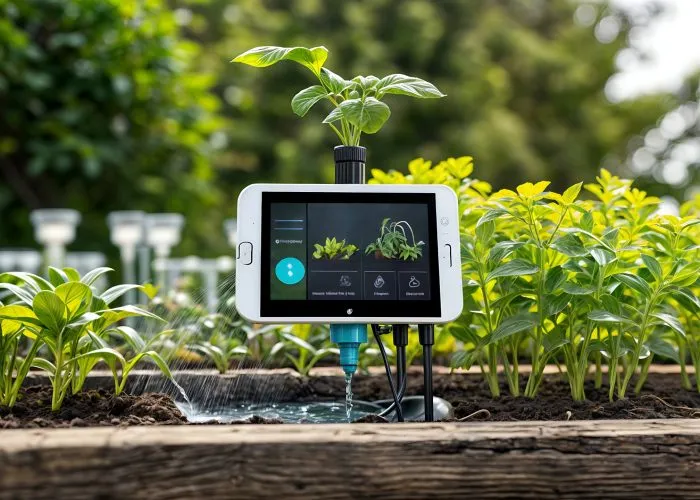
Capacitive Probe Insertion Tools: Ensuring the soil sensor has “total contact” with the earth; air gaps around a sensor lead to wildly inaccurate data.
-
Signal Analyzers: Handheld devices used during installation to map “Dead Zones” in the wireless mesh, ensuring 100% coverage before the system is finalized.
-
Astronomical Clock Integration: Allowing the system to “know” its exact GPS location and the sun’s position, providing context to light and temperature sensors.
-
VLAN Segmentation: For security, the sensor network should be isolated from the home’s main Wi-Fi to prevent a hacked sensor from providing access to private computers.
The Risk Landscape: Failure Modes and Environmental Entropy
The outdoors is an entropic force that works against digital logic. A resilient plan must account for these taxonomies of risk:
-
“Bio-Fouling”: Spiders and insects are attracted to the warmth of IR sensors. A single cobweb can trigger a “Motion” alert or block an optical lens. Strategy: Use “Ultrasonic Repellents” or regular mechanical cleaning cycles.
-
Thermal Drift: Extreme heat can cause the internal components of a sensor to expand, shifting its calibration. Strategy: Use industrial-grade components with “Active Compensation” algorithms.
-
Signal Shading: A system that works in winter may fail in summer when the trees leaf out, blocking the line-of-sight for wireless signals. Strategy: Place gateways above the canopy or use sub-GHz frequencies.
Governance, Maintenance, and Long-Term Adaptation
A sensor network is a living infrastructure that requires a “governance” mindset rather than a “set and forget” mentality. This involves regular monitoring, review cycles, and adjustment triggers.
The Maintenance Hierarchy
-
Quarterly: Physical inspection. Check for corrosion on battery terminals and “Bio-Fouling” on lenses.
-
Biannually: Calibration audit. Compare soil moisture readings against a manual “soil core” to ensure the sensor hasn’t drifted.
-
Seasonally: Sensitivity adjustments. High winds in autumn require lower sensitivity on motion sensors to prevent false alerts from blowing leaves.
Adjustment Triggers
Systems should be reviewed when:
-
Landscape Maturation: As shrubs grow into trees, they change the “heat signature” and “signal path” of the yard.
-
Hardware Obsolescence: If a protocol (like Zigbee) is being phased out, a plan must be made to bridge those sensors to a Matter-based hub.
Measurement, Tracking, and Evaluation
How do you define “success” in an outdoor sensor overview implementation? We use “Leading” and “Lagging” indicators.
Key Performance Indicators (KPIs)
-
False-Trigger Ratio: The number of automated actions (e.g., lights turning on) that were unnecessary. Target: <2%.
-
System Latency: The time from a sensor trigger to a physical action. In a professional design, this should be under 200ms.
-
Resource Efficiency: Comparing water and electricity use before and after sensor-based automation.
Documentation Examples
-
The “Heat Map” of Connectivity: A digital map showing signal strength across the property.
-
The Event Log: A record of every sensor trigger, used to identify “Trouble Nodes” that may need recalibration or relocation.
Common Misconceptions and Industry Myths
-
“Wireless means no maintenance.” Wireless sensors still have batteries. In cold climates, battery life can drop by 50%. A truly “low-maintenance” system is hard-wired.
-
“Sensors replace the gardener.” Sensors provide data; they do not provide judgment. A sensor can tell you the soil is dry, but it cannot tell you if the plant is dying from a fungus that over-watering will worsen.
-
“Motion sensors are for security only.” In a flagship home, motion sensors are used for energy management—turning off water features or accent lights when no one is in the zone.
-
“Solar-powered tech works everywhere.” In the U.S. North, solar sensors often fail in December due to low light and snow cover. They require a “Winter-Reserve” battery capacity.
-
“All sensors are Matter-compatible.” While Matter is the future, many legacy high-end sensors still require proprietary bridges. Always check for “Native” vs. “Bridged” compatibility.
Ethical, Practical, and Contextual Considerations
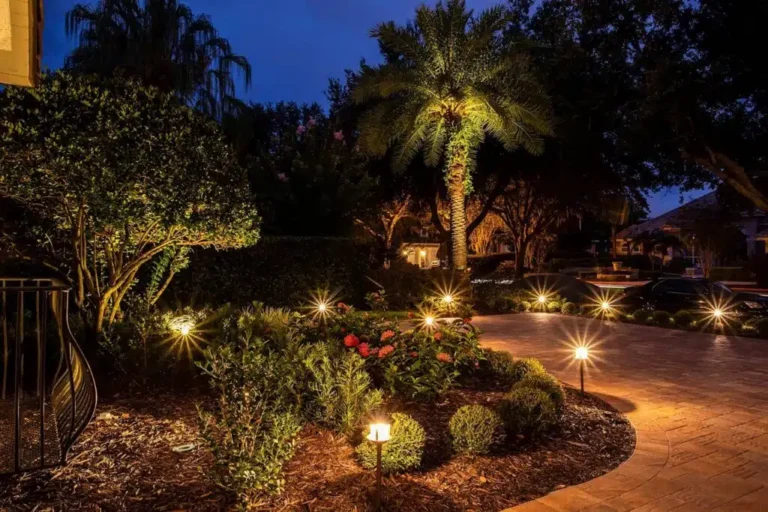
As we blanket our exteriors in sensors, we must consider “Digital Pollution.” Excessive motion-activated lighting disrupts the nocturnal habits of local wildlife and contributes to “Sky Glow.” A responsible automation strategy uses sensors to reduce light pollution, ensuring lights are only on when necessary. Furthermore, we must be transparent with neighbors about the field of view of AI-vision cameras, ensuring that our “Perimeter Security” does not infringe upon their “Perpetual Privacy.”
Conclusion: The Future of Autonomous Stewardship
The maturation of exterior sensing represents a significant milestone in our relationship with the built environment. We have moved past the era of dominating the landscape with manual labor and toward an era of subtle, data-driven stewardship. By following a rigorous outdoor sensor overview, property owners can achieve a landscape that is not only more beautiful and secure but also more resilient to the environmental challenges of the next decade.
Ultimately, the goal of these systems is to restore our focus. By automating the mundane—the watering, the lighting, the monitoring—we free ourselves to simply be in the space. The most advanced landscape is the one that understands your presence without you ever having to say a word, letting the environment breathe and respond in perfect harmony with the movements of life.