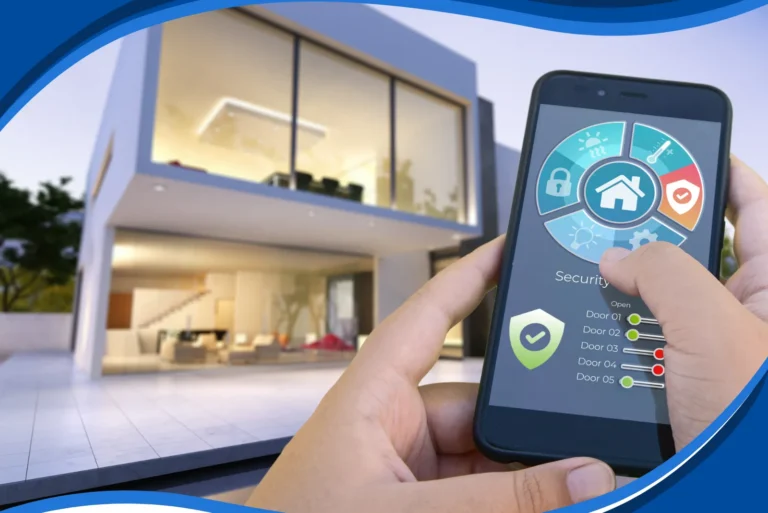
How to Manage Outdoor Sensor Interference: A Definitive Guide
The deployment of sophisticated outdoor automation—ranging from perimeter security and environmental monitoring to autonomous maintenance—is predicated on the reliability of data. However, unlike the controlled, homogenized environment of an interior server room or a smart living space, the exterior world is a chaotic medium of signal degradation. Sensors placed outside are subjected to a constant barrage of physical, electromagnetic, and biological noise. When these inputs are compromised, the entire logic of the building’s exterior management system begins to fracture, leading to false positives in security or catastrophic oversights in irrigation and safety.
Managing these systems requires a fundamental acknowledgment: an outdoor sensor is never truly “alone.” It exists within a dense web of radio frequencies, thermal shifts, and organic interference. A motion sensor might be triggered by a sudden gust of wind moving a branch; a soil probe might report inaccurate moisture levels due to localized mineral deposits; a wireless mesh node might lose connectivity because a neighbor installed a powerful new router. The challenge for estate managers and technical editors is to move beyond the binary of “working” versus “broken” and toward a nuanced understanding of signal integrity.
The complexity of this task is amplified by the sheer variety of sensor modalities currently in use. Passive Infrared (PIR), microwave, ultrasonic, and LiDAR sensors each possess distinct vulnerabilities. An interference pattern that disables a microwave sensor might have zero impact on an infrared unit. Consequently, the strategy for maintaining these systems must be multi-modal and adaptive. This article serves as a definitive exploration of the physics and logistics of signal preservation, providing a structural framework for those tasked with maintaining high-autonomy exterior environments.
How to manage outdoor sensor interference
To address the question of how to manage outdoor sensor interference, one must first redefine what “interference” actually entails. In professional circles, it is categorized as any unwanted signal that obscures or mimics the target data. This can range from “white noise” (random atmospheric fluctuations) to “ghosting” (where a signal reflects off a surface and creates a false reading). A common oversimplification is the belief that higher-sensitivity sensors are always better. In fact, high sensitivity in an unshielded outdoor environment often leads to a higher “False Alarm Rate” (FAR), as the sensor lacks the discriminating logic to distinguish between a human intruder and a stray animal.

The risk of oversimplification often leads to a “whack-a-mole” approach to maintenance. An installer might move a sensor a few feet to avoid a metal fence, only to find that it now suffers from “multipath interference” caused by a nearby stone wall. The “top” plans for managing these issues are those that utilize “Signal-to-Noise Ratio” (SNR) as their primary metric. By focusing on strengthening the signal and suppressing the noise simultaneously—rather than just adjusting sensitivity—one creates a system that is resilient to environmental shifts.
Furthermore, management strategies must account for the temporal nature of interference. Some disruptions are cyclical, such as “thermal bloom” during sunset, while others are stochastic, such as radio frequency interference (RFI) from passing aircraft or local utility work. A professional-grade plan incorporates “Time-of-Flight” (ToF) logic and digital signal processing (DSP) to filter out these transient anomalies, ensuring that the automation hub only acts on verified, persistent data.
The Systemic Evolution of Signal Reliability
Historically, outdoor sensing was a mechanical affair. Rain gauges used physical tipping buckets; security relied on break-beam photo-eyes. These were largely immune to electromagnetic interference but highly susceptible to physical blockages. The move toward solid-state electronics in the 1990s introduced the first wave of RFI issues. As we moved from hardwired connections to Wi-Fi, Bluetooth, and LoRaWAN, the “invisible” landscape became increasingly crowded.
The systemic shift occurred when sensors moved from being “detectors” to “interpreters.” Modern sensors do not just report “motion”; they analyze the thermal signature and the rate of displacement to determine what is moving. This evolution has changed the nature of interference management. We are no longer just cleaning lenses; we are managing the data pathways and the algorithmic filters that interpret the world. The current era is defined by “Edge Intelligence,” where the sensor itself performs the first layer of noise cancellation before the data even reaches the central controller.
Conceptual Frameworks and Mental Models
Professionals use specific frameworks to visualize and solve interference problems:
-
The Fresnel Zone Model: Used primarily for wireless data sensors, this model visualizes an elliptical “tunnel” between the sensor and the receiver. Interference isn’t just a blockage on the direct line; any object within this elliptical zone can cause signal reflection and phase cancellation.
-
The Swiss Cheese Model of Redundancy: This framework posits that every sensor modality has “holes” (vulnerabilities). By layering different sensor types—such as pairing a PIR sensor with a microwave sensor (Dual-Tech)—you ensure that a false trigger in one (the “hole”) is caught by the other.
-
The Thermal Gradient Theory: This model treats the outdoor environment as a fluid of changing temperatures. It helps predict where “ghosting” will occur, such as when a cold rain hits a sun-warmed asphalt driveway, creating a localized fog that can blind certain optical and infrared sensors.
Taxonomy of Interference Categories
Interference is rarely a single phenomenon; it is usually a compounding set of variables.
| Category | Source Example | Primary Impact | Strategy |
| Electromagnetic (EMI) | Power lines, Wi-Fi routers | Signal jitter; connectivity loss | Shielded cabling; frequency hopping |
| Atmospheric | Fog, heavy rain, snow | Range reduction; false triggers | Frequency modulation; heated lenses |
| Biological | Spiders, nesting birds, ivy | Total occlusion; physical damage | Physical “guards”; ultrasound deterrents |
| Thermal | Heat haze, sunset/sunrise | “Blindness” in PIR sensors | Differential sensing; shaded mounting |
| Mechanical | Wind vibration, traffic | Microphonic noise; false vibration | Tuned dampening; software thresholds |
Decision Logic: Shielding vs. Filtering
When determining how to manage outdoor sensor interference, the first branch in the decision tree is whether the problem is “Physical” or “Digital.” If a sensor is being triggered by a swaying branch, the solution is physical (trimming the branch or relocating the sensor). If the sensor is reporting “phantom” motion at 2:00 PM every day, the solution is digital (adjusting the thermal threshold or implementing a “time-of-day” mask).
Detailed Real-World Scenarios and Constraints
Scenario 1: The Waterfront Estate
A property with high-end perimeter security faces constant “nuisance alarms” due to reflections off the moving water.
-
The Problem: The water’s surface acts as a mirror for both infrared and microwave signals.
-
The Strategy: Implement LiDAR or “Video Analytics” with a “Water Mask.” The software ignores all motion within the specific GPS coordinates of the shoreline.
-
Constraint: Heavy mist or sea spray can still degrade LiDAR performance, requiring a secondary “Rain-Mode” logic.
Scenario 2: The Urban High-Rise Terrace
An automated garden on a penthouse terrace suffers from inconsistent soil moisture readings.
-
The Problem: The high-voltage elevator motors and rooftop HVAC units create massive EMI that induces “voltage spikes” in the sensor wires.
-
The Strategy: Transition to “Tinned Copper Shielded Twisted Pair” (STP) wiring and ground the drain wire at the controller only.
-
Second-Order Effect: While this solves the interference, it increases the stiffness of the cabling, requiring larger conduit bends.
Planning, Cost, and Resource Dynamics
The financial planning for interference mitigation is often an exercise in “Future-Proofing.”
| Investment Tier | Focus | Cost Driver |
| Baseline | Standard mounting; unshielded wire | High labor (troubleshooting) |
| Professional | Dual-tech sensors; shielded wire | Moderate hardware; low labor |
| Mission-Critical | AI-Video analytics; mesh redundancy | High hardware; specialized config |
Opportunity Cost: Saving $500 on unshielded cable for a large-scale project often results in $5,000 of “Truck Rolls” (technician visits) to find a single intermittent EMI source.
Tools, Strategies, and Support Systems
Managing interference requires a specific toolkit:
-
Spectrum Analyzers: To visualize the “crowdedness” of the local 2.4GHz or 900MHz bands.
-
Ferrite Cores: Small “chokes” placed on power cables to suppress high-frequency noise.
-
Lens Hoods and Shrouds: Simple physical barriers that prevent direct sunlight from “saturating” an optical sensor.
-
Oscilloscopes: To see the “cleanliness” of the electrical signal reaching a sensor.
-
Differential Sensing: Using two sensors in one location and only acting if the “delta” (difference) between them meets a specific pattern.
-
Heated Sensor Housings: To prevent condensation and frost from forming an opaque layer over the lens.
Risk Landscape and Failure Modes
The risk of “Signal Masking” is the most dangerous failure mode. This occurs when the level of interference (noise) is so high that it completely hides a legitimate signal (the intruder or the moisture drop). In this state, the system may report “All Clear” simply because it has lost the ability to “see” anything at all.
Another risk is “Algorithmic Fatigue.” If a system is bombarded with false positives, the owner—or the automated hub—may begin to ignore alerts. A professional plan must include a “Sensitivity Decay” protocol: if a sensor triggers ten times in one hour with no verified result, the system should automatically flag that sensor for maintenance and switch to a secondary modality.
Governance, Maintenance, and Long-Term Adaptation
Outdoor sensors are not “set and forget.” They are active participants in a changing environment.
Layered Maintenance Checklist:
-
Monthly: Physical lens cleaning and clearing of spider webs (which can mimic human motion in PIR sensors).
-
Biannually: Check cable jackets for UV degradation or rodent “gnaw” marks.
-
Annually: Re-map “Detection Zones” to account for the growth of trees and shrubs.
-
Post-Storm: Immediate verification of sensor alignment; high winds can “nudge” a sensor off its focal point.
Evaluation: Leading and Lagging Indicators
How do we measure if we are successfully managing interference?
-
Leading Indicator: SNR (Signal-to-Noise Ratio) trends. If the noise floor is rising, an interference source is likely approaching or degrading.
-
Lagging Indicator: The “False Alarm Ratio” (Number of Alarms / Number of Actual Events). A successful system should strive for a ratio as close to 1:1 as possible.
-
Documentation Example: A “Noise Map” of the property, showing areas of high EMI or thermal volatility.
Common Misconceptions and Oversimplifications
-
“Wireless is easier.” Wireless is easier to install, but significantly harder to manage over the long term due to the volatility of the RF environment.
-
“Cameras are the ultimate sensor.” Cameras are sensors too, and they suffer from interference like lens flare, spider webs, and digital “compression artifacts” during heavy rain.
-
“Shielded wire is overkill.” In an urban environment, shielded wire is the only way to ensure the data reaching the controller is what the sensor actually sent.
-
“I can just turn down the sensitivity.” Turning down sensitivity just makes the sensor “dumber”; it doesn’t make it “smarter” at ignoring the noise.
Conclusion
The art of how to manage outdoor sensor interference is a discipline of patience and precision. It requires moving beyond the initial “installation high” and into the granular reality of how physics interacts with electronic logic. A property that is well-managed is one where the sensors are protected from the environment as much as they are used to monitor it. By acknowledging the volatility of the exterior world and building in layers of mechanical and digital redundancy, we can ensure that our automation systems remain assets rather than liabilities. As technology advances, the tools for noise suppression will only improve, but the fundamental need for human editorial judgment in sensor placement and governance will remain the cornerstone of any resilient outdoor plan.