Backyard Automation Guide: The 2026 Editorial Reference for Managed Landscapes
The American residential exterior is currently undergoing a fundamental structural transition. For the better part of a century, the backyard was a static environment—a collection of flora and hardscape that required manual stewardship and seasonal labor. Improvements were historically limited to better mechanical tools or more durable materials. However, the convergence of high-bandwidth mesh networking, industrial-grade sensor arrays, and edge-computing logic has redefined the backyard as a high-performance, programmable volume. This evolution represents a shift from “decoration” to “infrastructure,” where the landscape functions as an autonomous extension of the home’s interior ecosystem.
In this contemporary context, the challenge for the property owner or estate manager lies in navigating a hostile environment. Unlike the controlled, climate-regulated interiors where home automation first matured, the backyard is subject to extreme thermal cycling, UV degradation, signal shading from dense foliage, and the corrosive effects of localized humidity or salinity. Engineering a successful autonomous landscape requires moving beyond the consumer-grade “gadgetry” of the last decade and adopting a systemic, architectural approach. It is no longer about having a “connected” garden; it is about establishing a resilient, self-governing environment that manages its own resources and atmospheric comfort.
As we analyze the maturation of these technologies in 2026, the hallmark of a flagship installation is “Invisibility.” The most sophisticated systems are those that vanish into the landscape, performing complex environmental adjustments—such as soil moisture modulation, circadian lighting transitions, and wind-sensitive shading—without user intervention. This article provides a definitive editorial roadmap for conceptualizing and executing these managed environments, exploring the technical logic, economic dynamics, and long-term governance required to maintain a truly autonomous exterior.
Backyard automation guide
To engage effectively with a backyard automation guide, one must first decouple the concept from simple remote control. In a professional editorial context, “automation” refers to a set of pre-programmed actions triggered by specific inputs, while “autonomy” suggests a system capable of adjusting its behavior based on fluctuating environmental variables. In the United States, where regional climates dictate vastly different requirements—from the arid Southwest to the humid Eastern Seaboard—a standardized approach is physically impossible.
An analytical overview reveals three primary pillars of integration that define a flagship-level project:
-
Environmental Synchronization: The ability of the system to mimic natural cycles, such as circadian-aligned lighting and evaporation-based irrigation.
-
Structural Resilience: The use of industrial-grade protocols (e.g., Matter-over-Thread or DALI) that ensure the system functions despite physical distance or network interference.
-
Invisible Governance: The transition of the property owner from an “operator” to a “monitor,” where the technology handles the drudgery of maintenance while the human provides high-level aesthetic or horticultural direction.
The risk of oversimplification in this field is significant. Many homeowners fall into the trap of “Fragmented Automation,” where they possess five different apps for five different devices. A professional-grade guide emphasizes interoperability—where the triggering of a “Dinner Scene” simultaneously dims the landscape lights, activates the infrared heaters to a specific thermal profile, and lowers the motorized bug screens without the user touching a single interface. The objective is the removal of the user from the control loop, allowing the space to respond to the occupant’s presence and the environment’s state simultaneously.
Contextual Evolution: From Timers to Temporal Intelligence
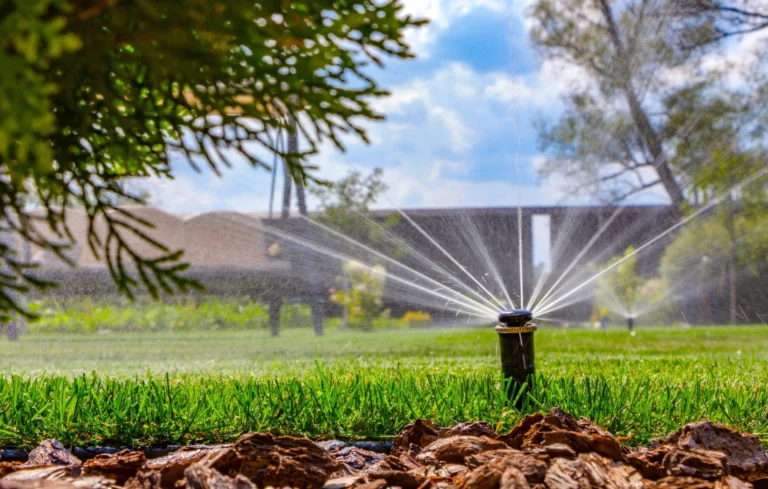
The history of external management in the twentieth century was defined by rigidity. The mechanical sprinkler timer, with its plastic pins and fixed schedules, was the height of residential technology for decades. These systems were famously indifferent to the environment; they would water lawns during thunderstorms, leading to significant resource waste and the degradation of soil health through over-saturation.
The 1990s and early 2000s introduced the first wave of “connected” devices, but they were largely proprietary and fragile. This era was characterized by siloed automation—a homeowner might have a smart pool controller that had no awareness of the landscape lighting system or the motorized patio shades. This lack of interoperability created a technical debt where the maintenance of the automation itself became a full-time task.
By 2026, the industry has consolidated around systemic interoperability. The maturation of the Matter protocol has allowed for a global logic across the estate. We have moved toward edge computing, where the intelligence resides in localized hubs or even within the sensors themselves. This ensures that even if the internet service provider fails, the local biological needs of the garden—irrigation, security, and climate control—remain uninterrupted. The exterior has finally caught up to the interior in terms of sophisticated, software-defined control.
Conceptual Frameworks and Mental Models
When evaluating the implementation of autonomous systems, three mental models help organize the complexity:
1. The “Hostile Environment” Resilience Framework
Unlike an indoor server room, the backyard is an entropic environment. Every component must be assessed through its Ingress Protection (IP) rating and its resistance to thermal shock. This framework dictates that the most expensive part of a system is not the hardware, but the labor required to replace it once the landscape has matured. Reliability is the primary luxury.
2. The Biophilic Synchronization Model
This model suggests that technology should serve the biology of the site. Lighting should not just provide visibility; it should protect the circadian rhythms of local fauna and the sleep quality of the occupants. Irrigation should not just “wet the ground”; it should manage the volumetric water content of the soil to encourage deep root growth based on local evapotranspiration (ET) rates.
3. The “Invisibility” Threshold
A design is successful when the occupant no longer notices the technology. This is achieved through slow “Fade Transitions” in lighting (changing scenes over minutes rather than seconds) and “Silent Maintenance” (robotic mowers that operate with decibel levels low enough for night-time use). Success is defined by the absence of manual friction.
Key Categories of Autonomous Infrastructure
The choice of architecture dictates the long-term viability of the installation. A smart estate is comprised of several functional pillars, each with specific trade-offs.
| Category | Primary Benefit | Key Technology | Trade-off |
| Precision Irrigation | Water savings (30-50%) | Soil moisture capacitance sensors | High initial calibration required |
| Circadian Lighting | Wellness & Aesthetics | Tunable white LEDs (2200K-5000K) | Requires specialized drivers/PoE |
| Climate Modulation | Extended living season | IR radiant heaters & misters | High energy/water consumption |
| Autonomous Mowing | Turf health & Silence | RTK-GPS (No-wire) navigation | High hardware cost |
| Acoustic Immersion | Atmospheric control | Multi-zone DSP-controlled audio | Sound bleed/Neighbor interference |
| Resource Management | Efficiency | Ultrasonic flow meters & Leak detect | Requires professional plumbing |
Decision Logic for Category Prioritization
The realistic logic for most estates follows a “Basement to Boundary” rule. Start with the infrastructure that is hardest to change later: the underground wiring (conduit), the drainage systems, and the high-bandwidth network backhaul. Decorative elements, such as specific light fixtures or speakers, can be treated as modular “Edge” devices that are updated as technology shifts, but the core infrastructure should be designed for a twenty-year lifespan.
Detailed Real-World Scenarios
Scenario 1: The High-Desert Smart Oasis (Arizona)
-
Constraint: Extreme heat and strict water mandates.
-
Implementation: Sub-surface drip irrigation integrated with a smart controller that tracks ET rates. If the local weather station predicts high winds, the system delays misting to prevent water drift.
-
Failure Mode: “Salt-creep” on sensors from hard water leads to false moisture readings.
-
Redundancy: Implementation of a secondary “master” flow meter to detect leaks in real-time.
Scenario 2: The Multi-Season Pavilion (Chicago)
-
Constraint: Drastic seasonal shifts and heavy snow loads.
-
Implementation: Perimeter infrared heaters integrated with occupancy sensors. Motorized louvered roof with integrated “Rain-and-Sun” sensors.
-
Second-Order Effect: The misting system creates a “cool-air curtain” that reduces the interior AC load of the adjacent living room by 15%.
-
Failure Mode: Snow accumulation on sensors prevents the louvered roof from opening to vent heat during an unseasonably warm winter day.
Scenario 3: The Urban Rooftop “Privacy Bubble” (NYC)
-
Constraint: High wind speeds and excessive city noise.
-
Implementation: Motorized vertical screens made of high-tensile, wind-rated fabric linked to a local anemometer.
-
Smart Logic: If winds exceed 30mph, screens retract automatically. Audio zones use digital white noise to mask street sounds during evening use.
Planning, Cost, and Resource Dynamics
The economic argument for autonomy has shifted from “luxury” to “asset protection.” In many U.S. regions, the replacement cost of a mature landscape far exceeds the cost of the automation system that protects it.
Estimated Investment Ranges (2026 Data)
| Scale | Core Infrastructure | Tech Layer (Sensors/Nodes) | Total Build-Out |
| Entry-Level Smart | $5,000 | $2,000 | $7,000 – $12,000 |
| Professional Integrated | $15,000 | $10,000 | $25,000 – $50,000 |
| Flagship Bespoke | $50,000+ | $40,000+ | $100,000+ |
Opportunity Cost: Failing to automate irrigation in a warming climate represents an opportunity cost in “Plant Replacement.” A mature specimen tree can cost $10,000+ to replace. A $1,500 smart controller is essentially a high-yield insurance policy. Furthermore, the labor savings from robotic mowing typically provide a 100% ROI within 3.5 years for properties over 0.5 acres.
Tools, Strategies, and Support Systems
A flagship design is only as strong as its foundation. A professional-grade system requires specialized tools and protocols.
-
Matter over Thread: The non-negotiable standard for 2026. Thread is a self-healing mesh network that doesn’t require a central router for every device to communicate, making it perfect for sprawling backyards.
-
RTK-GPS (Real-Time Kinematic): For robotic mowers, this has replaced boundary wires. It uses satellite corrections to provide centimeter-level accuracy, allowing for perfect “striping” on the lawn.
-
Power-over-Ethernet (PoE) Lighting: An emerging trend for high-end landscapes. It delivers power and data over a single Cat6 cable, allowing for individual addressability of every light fixture without voltage drop issues.
-
Flow Sensors: Ultrasonic meters that can detect a “drip” leak (0.1 gallons per minute). This is the single most important tool for preventing property damage.
-
Astronomical Clocks: Unlike simple timers, these use GPS coordinates to calculate local sunrise and sunset, adjusting security and atmospheric lighting automatically.
-
NEMA-Rated Enclosures: Essential for housing central controllers in non-conditioned spaces, providing protection against dust, humidity, and thermal soak.
Taxonomy of Risk in Hostile Environments
Outdoor systems face a unique set of compounding risks that are often overlooked in the planning phase:
-
Biological Interference: Rodents (squirrels) chewing on soy-based wire insulation. All low-voltage wiring must be housed in PVC or flexible conduit, even if rated for direct burial.
-
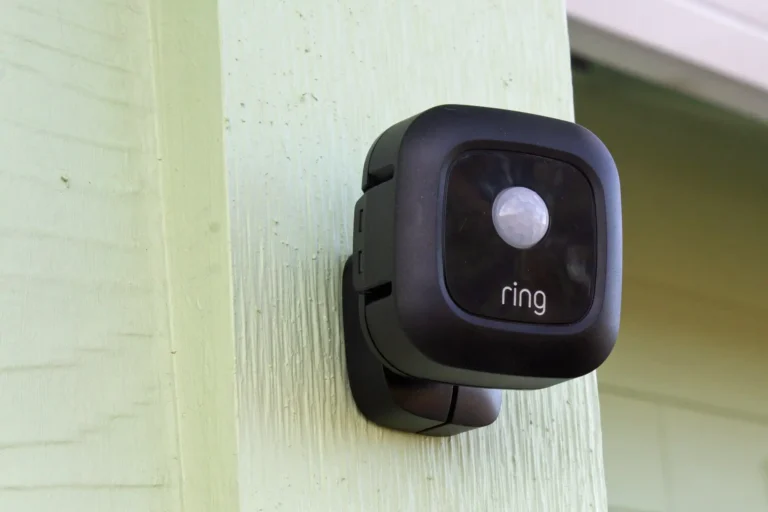
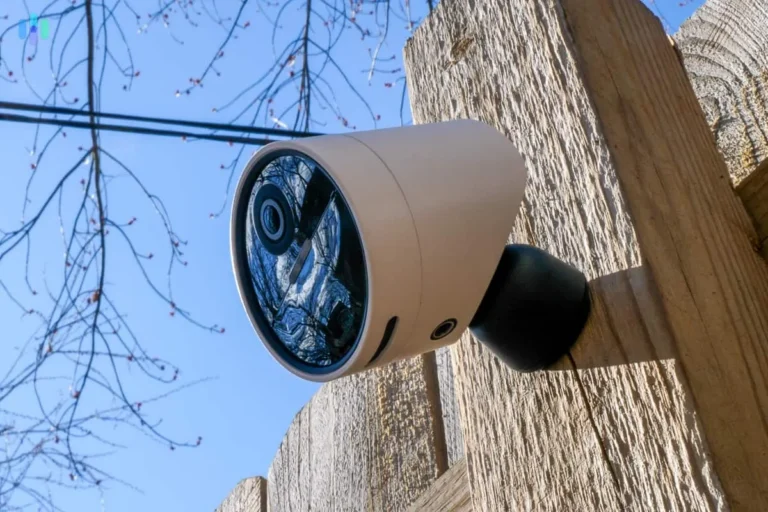
Spectral Decay: Plastic components in consumer-grade cameras becoming brittle and opaque due to UV exposure. Professional specifications prioritize glass lenses and powder-coated aluminum housings.
-
Signal Shading: A system that works in March might fail in July because the trees have leafed out, blocking the 2.4GHz Wi-Fi signal. Mesh nodes must be over-provisioned to ensure redundant paths.
-
Firmware Obsolescence: Buying hardware from a startup that goes bankrupt, leaving the estate with “bricked” hardware. Prioritizing open standards (Matter) and local-control APIs (Home Assistant/Control4) mitigates this risk.
Governance, Maintenance, and Long-Term Adaptation
An automated landscape is a living infrastructure that requires a “governance” mindset rather than a simple “maintenance” mindset. This involves monitoring, review cycles, and adjustment triggers.
The Maintenance Hierarchy
-
Quarterly: Sensor calibration. Check moisture probes against a manual soil core to ensure the data hasn’t “drifted.” Clean lenses on AI-vision cameras.
-
Bi-Annually: Firmware audit. Ensure all Matter bridges are on stable versions. Update astronomical clock offsets for seasonal transitions.
-
Seasonally: Hardscape check. Inspect lighting seals for moisture ingress before the rainy season begins. Drain high-pressure misting lines in freeze-prone regions.
Adjustment Triggers
Systems should be reviewed and re-programmed when:
-
Landscape Maturation: As trees grow, they shade smaller plants, changing their water needs. The “Sun-Tracking” logic of motorized pergolas must be updated.
-
Utility Rate Shifts: If electricity prices spike, the “Load Shedding” logic (e.g., dimming lights by 20% during peak hours) should be adjusted.
-
Regional Mandates: New water restrictions in drought-prone areas require the system to shift from “Aesthetic” mode to “Survival” mode.
Measurement, Tracking, and Evaluation
How do we measure the success of an autonomous landscape? We use “Lagging Indicators” (what happened) and “Leading Indicators” (what is likely to happen).
Key Performance Indicators (KPIs)
-
Hydration Efficiency: Measuring the “Gallons per Plant” ratio over a season. A successful system should see a 30% reduction in water use compared to traditional timers.
-
Mean Time to Detect (MTTD): How long does it take the system to alert the owner to a leak or a failed light? In a flagship system, this should be under 60 seconds.
-
System Latency: The time between a sensor trigger and an actuator response. In a professional design, this should be under 200ms.
Documentation Examples
-
The “Lumen Map”: A nightly audit of lighting output to ensure no dark spots have emerged due to bulb failure.
-
ET Logs: A record of how the system responded to heatwaves, providing proof of the system’s intelligence for insurance or property resale.
-
Water Audit Reports: Monthly logs showing water usage per zone, helping to identify “Silent Leaks” before they cause foundation damage.
Common Misconceptions and Industry Myths
-
“Wireless means no wires.” You still need power. “Wireless” refers only to the control signal. A wireless speaker still needs a power cable or frequent charging. Reliability always favors a hard-wired power backbone.
-
“Outdoor tech is just indoor tech in a box.” Thermal management is entirely different. An indoor TV in an outdoor enclosure will fail from “heat-soak” during a summer afternoon because it lacks active cooling and UV-resistant glass.
-
“Smart irrigation saves water automatically.” If the soil zones are programmed incorrectly, a smart controller can waste more water by being too reactive to minor humidity shifts. Calibration is the key to efficiency.
-
“Solar is always better.” In the U.S. North, solar-powered sensors often fail in the winter due to snow cover and shorter days. Hard-wired power remains the gold standard for mission-critical security and irrigation.
-
“Automation is a privacy risk.” While cameras are sensitive, your smart hose has no interest in your data. Segmenting these onto a separate VLAN (Virtual Local Area Network) solves most security concerns.
Ethical, Practical, and Contextual Considerations
As we automate our exterior environments, we must consider the impact on the local ecosystem. Excessive outdoor lighting—even if automated—contributes to light pollution and disrupts the migratory patterns of birds and nocturnal insects. A responsible approach is to implement Dark Sky compliant fixtures that only illuminate when human presence is detected. Furthermore, our irrigation logic must respect regional water tables, prioritizing the survival of native species over non-native turf. The smart backyard must be a good neighbor to the local ecosystem, not just a productive asset for the owner.
Conclusion: The Synthesis of Technology and Ecology
The maturation of exterior automation represents a significant milestone in American architectural history. We have moved past the era of dominating the landscape with loud, inefficient machines and toward an era of subtle, data-driven stewardship. By following a rigorous backyard automation guide, property owners can achieve a landscape that is not only more beautiful and comfortable but also more resilient to the environmental challenges of the next decade.
Ultimately, the goal of these systems is to restore our relationship with the outdoors. By automating the drudgery—the watering, the mowing, the security checks—we free the human occupant to simply be in the space. The most advanced landscape is the one that allows you to forget that the technology is there at all, letting the light and the water follow the movement of life itself.