Best Automated Sunshades for Patios: A Definitive Editorial Guide
The integration of motorized shading into residential architecture marks a departure from static exterior design toward a dynamic, responsive environment. In the United States, where regional climates range from the intense ultraviolet exposure of the High Desert to the humid, wind-swept Atlantic coast, the patio has evolved from a simple concrete slab into a high-utility “outdoor room.” This transition is predicated on the ability to modulate light and temperature in real-time. Automated sunshades are no longer merely luxury accessories; they are critical thermal regulators that determine the seasonal viability of outdoor living spaces.
The engineering behind these systems has progressed significantly beyond basic motorized rollers. Modern shading architecture now incorporates high-torque tubular motors, low-latency mesh networking, and advanced textile science. A truly sophisticated installation balances aesthetic integration with systemic resilience, ensuring that the shading fabric can withstand wind-loading and UV degradation while the control logic remains intuitive. For the property owner, the challenge lies in navigating a market saturated with consumer-grade gadgets to find professional-grade solutions that offer long-term organic value.
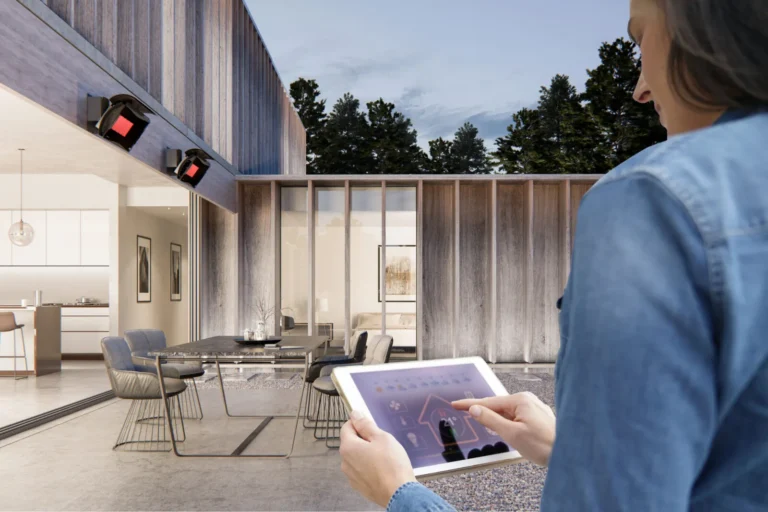
Selecting and implementing the right system requires a deep understanding of structural constraints, material science, and digital interoperability. When shading is treated as an isolated purchase, it often leads to “Systemic Friction”—where the shades fail to communicate with the home’s broader climate or lighting logic. Conversely, a pillar installation acts as a sentinel, proactively reacting to barometric shifts and solar angles to protect both the inhabitants and the interior furnishings from solar gain. This article serves as the definitive editorial reference for the strategic deployment of autonomous exterior shading.
best automated sunshades for patios
To identify the best automated sunshades for patios, one must look past the superficial convenience of a remote control to the underlying structural integrity and sensor logic. In the professional segment, excellence is defined by “Anticipatory Response.” This refers to systems that do not require human intervention to prevent damage or optimize comfort. A premier system utilizes integrated anemometers (wind sensors) and pyranometers (solar intensity sensors) to decide when to deploy or retract based on safety thresholds and thermal demand.
A common oversimplification in this field is the “One-Size-Fits-All” fallacy. Homeowners often assume that a standard motorized screen from a big-box retailer provides the same utility as a custom-engineered solution. In reality, the “best” systems are those that account for “Fabric Deflection” and “Edge Retention.” For instance, in high-wind regions, a “Zipper Track” system is essential; it locks the fabric into the side channels, preventing the shade from acting as a sail and potentially damaging the home’s fascia. Without this mechanical retention, even the most expensive motor is susceptible to environmental failure.
Furthermore, the “Smart” aspect of these shades is only as robust as their “Local Control” capability. A frequent mistake is relying on cloud-dependent Wi-Fi bridges. If the internet fails during a sudden summer squall, a cloud-dependent shade may fail to retract, leading to catastrophic mechanical failure. Professional-grade systems prioritize protocols like Zigbee, Z-Wave, or hardwired RS-485 connections to ensure that the wind sensor’s “Emergency Retract” command reaches the motor in milliseconds, regardless of the home’s external connectivity status.
Contextual Evolution: From Canvas Awnings to Smart Enclosures
The history of exterior shading in America is a trajectory from “Passive Protection” to “Active Governance.” In the mid-20th century, the standard was the hand-cranked canvas awning—heavy, prone to mold, and requiring significant physical effort to manage. These were binary systems: they were either out, or they were in. The 1990s introduced basic motorization, usually via a toggle switch, which solved the physical labor issue but did nothing to address the risk of wind damage or the inefficiency of manual scheduling.
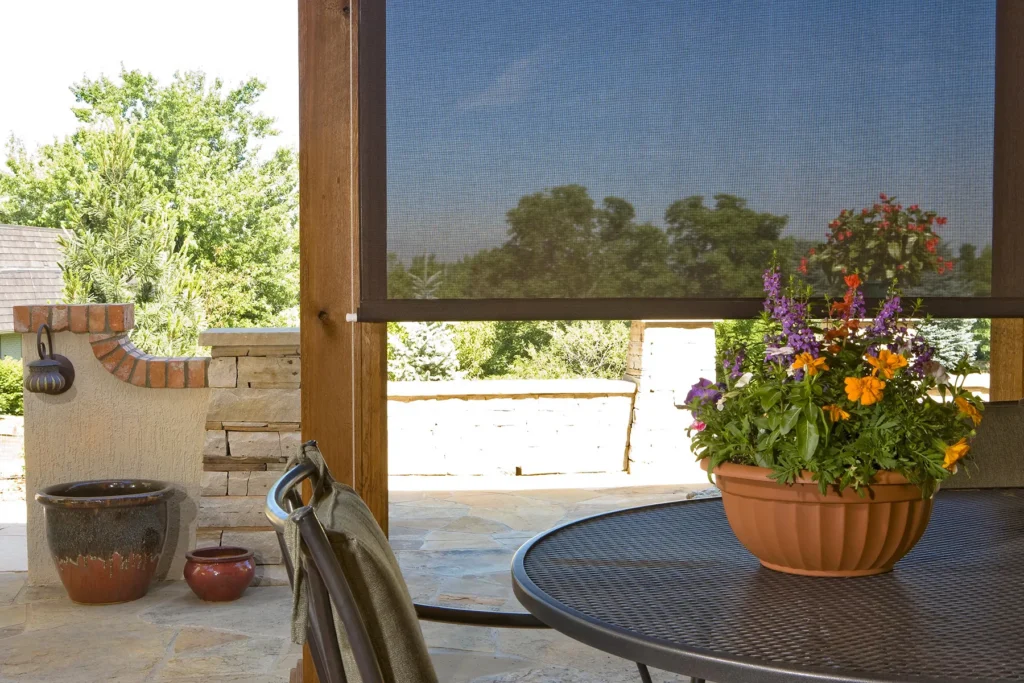
In the current era, we are seeing the rise of “Interconnected Enclosures.” The modern shade is a data-point in the home’s energy model. In the winter, the shades remain retracted to allow for “Passive Solar Gain,” heating the home’s interior via its windows. In the summer, the system proactively deploys before the sun hits the glass, reducing the load on the HVAC system by up to 30%. This evolution has turned the patio shade from a simple comfort feature into a critical component of a home’s sustainable energy strategy.
Conceptual Frameworks and Mental Models
Navigating the logistics of exterior shading requires specific mental models to evaluate long-term viability:
-
The “Fail-Safe” Priority: In any automated system, the safety of the structure takes precedence over the comfort of the user. A shade should always default to “Retracted” if a sensor fails or power is lost, preventing wind from catching an unmonitored fabric plane.
-
The Solar Orientation Model: Logic must be dictated by the “Azimuth” and “Elevation” of the sun relative to the patio’s specific orientation. A north-facing patio requires vastly different shading logic than a west-facing one, which faces the brutal late-afternoon “Heat Spike.”
-
The “Invisible Utility” Rule: The most successful automation is that which is never noticed. If a resident has to frequently adjust the shades manually, the automation logic has failed to account for the environmental nuances of the property.
Key Categories of Automated Shading Systems
Choosing the best automated sunshades for patios requires a breakdown by structural type and mechanical trade-off.
| Category | High-Performance Standard | Primary Advantage | Main Trade-off |
| Vertical Zip-Screens | Weighted Hem-Bar + Zipper Track | Total insect & wind seal | High installation precision required |
| Retractable Awnings | Lateral Arm + Pitch Control | Large overhead coverage | Highly vulnerable to wind gusts |
| Louvered Roofs | Extruded Aluminum Blades | 100% Waterproofing | Significant structural weight/cost |
| Cable-Guided Shades | Stainless Tension Cables | Minimalist aesthetic | Minimal wind resistance; fabric “flaps” |
| Dual-Roller Systems | Blackout + Solar Mesh | Day/Night versatility | Bulky headbox/cassette footprint |
Realistic Decision Logic
A critical decision point is the choice between Solar Mesh and Privacy Fabric. Solar mesh is rated by “Openness Factor” (typically 1% to 10%). A 5% openness factor is the standard for the US market, as it blocks 95% of UV rays while maintaining a view of the landscape. However, for west-facing patios where glare is the primary concern, a 1% openness factor is the professional choice to prevent “Optical Fatigue” during the sunset hours.
Detailed Real-World Scenarios and Constraints
Scenario 1: The Mountain-West “Wind Tunnel”
In regions like Colorado or Wyoming, sudden “Downslope Winds” can reach 50mph in seconds.
-
The Strategy: Utilization of “Ultra-High-Torque” motors with internal “Obstacle Detection.”
-
The Fix: Hardwired anemometers mounted on the roofline, not the patio, to detect wind before it hits the shade.
-
Failure Mode: Relying on a “Motion Sensor” on the shade’s hem-bar, which only reacts once the shade is already being buffeted.
Scenario 2: The Coastal Salt-Spray Zone
In Florida or the Carolinas, salt-air corrosion can seize a motor in less than three years.
-
The Strategy: Specify marine-grade, powder-coated aluminum cassettes and stainless-steel internal components.
-
The Fix: Enclosed cassettes that fully “Seal” the fabric and motor when retracted, preventing salt-mist from settling on the electronics.
Planning, Cost, and Resource Dynamics
The financial architecture of a premium shading project is defined by the “Cost of Durability.”
| Expense Tier | Component | Price Range (Per Unit) | ROI Factor |
| Hardware | Motorized Roller + Fabric | $2,500 – $6,000 | Component lifespan (5 yrs vs 15 yrs) |
| Infrastructure | Electrical + Framing | $1,000 – $4,000 | Structural safety and code compliance |
| Control Logic | Hubs + Sensors | $500 – $1,500 | Energy savings through HVAC reduction |
| Maintenance | Cleaning + Calibration | $200 – $500 (Annual) | Preservation of fabric “hand” and color |
Opportunity Cost: Purchasing a $500 DIY motorized shade often results in a “Double Spend.” When the motor fails due to moisture ingress or the fabric tears in a storm, the homeowner ends up paying for a professional system anyway, plus the cost of removing the failed unit.
Tools, Strategies, and Support Systems
A definitive installation for the best automated sunshades for patios utilizes the following support systems:
-
Obstacle Detection Motors: (e.g., Somfy Maestria) These motors stop immediately if they sense an object—like a chair or a pet—in the shade’s path, preventing motor burnout.
-
Solar-Powered Sensors: Eliminates the need for battery replacements in difficult-to-reach roofline locations.
-
Low-Voltage “Power Panels”: For projects with 5+ shades, a centralized power panel is superior to individual “Wall-Warts,” providing cleaner power and easier troubleshooting.
-
Fabric Tensioning Systems: Active tensioners ensure the fabric remains “Drum-Tight,” which is essential for both aesthetic appeal and resisting wind-induced harmonics.
Risk Landscape and Failure Modes
The “Taxonomy of Risk” for exterior shading includes both digital and physical threats:
-
“Hem-Bar Hang-up”: When one side of the shade descends faster than the other, causing the fabric to “telescope” or bunch. This usually happens due to debris in the tracks.
-
Radio Frequency (RF) Interference: Cheap 433MHz remotes can be blocked by thick masonry walls or interference from neighbor systems.
-
The “Retract Failure”: If a sensor fails to trigger during a storm, the lateral arms of an awning can exert enough leverage to pull the lag-bolts directly out of the home’s framing.
Governance, Maintenance, and Long-Term Adaptation
Automated shading is a “mechanical utility” that requires a governance schedule.
Annual Maintenance Checklist:
-
Track Lubrication: Use a dry-silicone spray (never grease or oil) on zipper tracks to ensure smooth travel.
-
Fabric “Bath”: Gently hose down the fabric to remove salt and pollen. Avoid pressure washers, which can strip the UV-protective coating.
-
Sensor Audit: Manually trigger the wind sensor (by spinning the cups) to verify the “Emergency Retract” logic is still active.
-
Limit Calibration: Check that the “Lower Limit” hasn’t drifted; a shade that tries to drive into the floor will eventually strip its internal gears.
Measurement, Tracking, and Evaluation
How do we measure the success of an automated shading project?
-
Quantitative Signal: “HVAC Cycle Reduction.” Tracking the decrease in AC runtime during the peak 2 PM – 6 PM window.
-
Leading Indicator: “Sensor Latency.” The time between a wind gust and the start of motor movement (should be < 3 seconds).
-
Qualitative Signal: “The Glare Test.” Can residents read a tablet screen on the patio at 5 PM without squinting?
Common Misconceptions and Industry Myths
-
“Black fabric makes the patio hotter.” In fact, dark fabrics absorb solar energy before it passes through, and high-quality dark meshes actually provide better glare reduction and “See-through” than light colors.
-
“Automation is just for when I’m not home.” Automation is most useful when you are home, as it constantly micro-adjusts to the sun’s movement without you having to find the remote.
-
“Wind sensors are 100% reliable.” No; “Micro-bursts” can hit a shade before the anemometer (often mounted elsewhere) can react. Always retract shades if high winds are predicted.
-
“All motors are the same.” Industrial motors use planetary gears and electromagnetic brakes; cheap motors use plastic gears that melt under high torque.
Ethical and Practical Considerations
In the US context, “Neighborly Friction” is a practical consideration. Highly reflective or brightly colored shades can create a “Reflective Glare” into a neighbor’s window. Editorial judgment suggests choosing neutral, matte-finish fabrics that blend into the architectural “Envelope.” Furthermore, property owners should consider the “Resale Factor.” A home with a proprietary, non-integrated shading system can be a hurdle for future buyers; standardizing on Matter or Zigbee ensures the system remains a long-term asset.
Conclusion
The pursuit of the best automated sunshades for patios is a masterclass in balancing environmental defense with residential comfort. It is an editorial process of selecting the few high-impact systems that provide genuine thermal utility while filtering out the noise of ephemeral gadgets. By prioritizing local control, robust structural retention, and predictive logic, homeowners can transform their exterior spaces into autonomous environments that are both resilient and efficient. Success is not found in the most expensive fabric, but in the system that remains invisible until the moment the sun—or the wind—demands its presence.