Common Outdoor Security Mistakes: The Definitive 2026 Reference
The hardening of a residential or commercial exterior is often approached as a linear problem of procurement: more cameras, brighter lights, and sturdier locks. However, security is not a product but a state of persistent vigilance, and the most sophisticated hardware remains subservient to the logic of its deployment. In the American landscape, where the “outdoor room” has become an extension of the primary living space, the vulnerabilities of the perimeter have multiplied. We no longer just protect a structure; we protect an interconnected ecosystem of autonomous tools, recreational assets, and digital access points.
The failure of most security strategies stems from a fundamental disconnect between perceived safety and actual risk. Property owners frequently fall victim to “Security Theater”—the installation of visible deterrents that provide a psychological sense of comfort but offer negligible resistance to a determined or methodical intruder. A high-resolution camera, for instance, is a forensic tool for after-the-fact investigation, not a preventative barrier. When the logic of the exterior is flawed, even the most expensive technology becomes a passive observer of its own circumvention.
Achieving true topical authority in perimeter defense requires an analytical shift from hardware to “Environmental Governance.” This involves understanding how landscaping, lighting, and digital protocols interact to create either a “Hard Target” or an invitation. It demands a move away from reactive fixes toward a holistic architecture of deterrence, detection, and delay. This definitive reference explores the systemic failures inherent in modern exterior management and provides the conceptual frameworks necessary to engineer a truly resilient environment.
Common outdoor security mistakes
To master the defensive posture of a property, one must first dismantle the oversimplifications that dominate the consumer security market. One of the most common outdoor security mistakes is the “Hardware-Centric Fallacy”—the belief that the mere presence of technology constitutes a defense. In reality, a camera placed in a position that is easily reached with a small ladder, or one that is blinded by its own infrared reflection against a nearby wall, provides zero utility. Security is an editorial process of placement and logic, not just installation.
Another systemic error lies in the “Siloing of Deterrents.” Many property owners treat lighting, landscaping, and surveillance as independent silos. This leads to scenarios where a security light is triggered by a motion sensor, but instead of deterring an intruder, it actually illuminates the lock they are attempting to pick, effectively assisting the unauthorized entry. A sophisticated plan recognizes that every light must be paired with a corresponding “blind spot” for the intruder and a clear “line of sight” for the surveillance system.
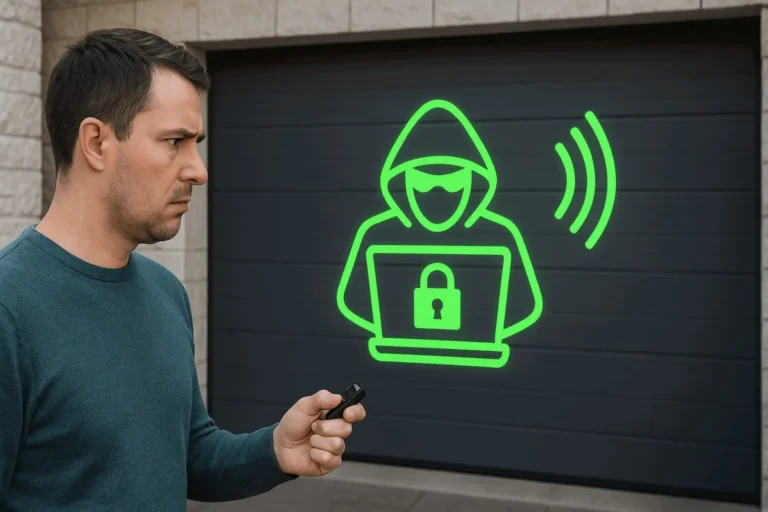
Furthermore, the “Digital Perimeter” is frequently ignored in favor of physical gates. In 2026, a significant percentage of outdoor security breaches are not physical but network-based. Utilizing outdoor Wi-Fi extenders or smart devices that lack enterprise-grade encryption allows an intruder to sit on a public sidewalk and infiltrate a home’s primary data network. The failure to treat an outdoor smart plug or a robotic mower’s docking station as a potential digital backhaul is among the most common outdoor security mistakes of the modern era.
Contextual Evolution: From Physical Barriers to Digital Perimeters
The trajectory of exterior security has moved through three distinct eras: the Era of Fortification, the Era of Surveillance, and the Era of Intelligence. Historically, security was defined by physical height and mass—walls, gates, and bars. This “Passive Defense” was effective but created a “Fortress Mentality” that was aesthetically unappealing and functionally rigid.

The 2000s ushered in the Surveillance Era, characterized by the democratization of CCTV. However, this era was plagued by “Information Overload,” where systems recorded everything but alerted the owner to nothing in real-time. We are now in the Intelligence Era. Modern security is characterized by “Edge Analytics”—cameras that can distinguish between a neighbor’s cat and a human crouching in the shadows. The shift is from recording a crime to preventing one through real-time, logic-based intervention.
Conceptual Frameworks and Mental Models
Navigating the complexities of property protection requires specific mental models to ensure long-term resilience:
-
CPTED (Crime Prevention Through Environmental Design): This framework dictates that the physical environment can influence offender behavior. By managing “Natural Surveillance” (keeping sightlines clear) and “Territorial Reinforcement” (defining property lines clearly), you reduce the psychological comfort of an intruder.
-
The 3-D Strategy (Deter, Detect, Delay): A successful system must satisfy all three. If you detect an intruder but have no barriers to delay them, they will be gone before the authorities arrive. If you have barriers but no detection, they have all the time they need to bypass them.
-
The “Adversarial Perspective”: One must periodically walk their own property at 2:00 AM from the street, looking for the “Path of Least Resistance.” This mental shift uncovers vulnerabilities that are invisible during a sunny afternoon walkthrough.
Key Categories of Perimeter Vulnerability
Building a hardened exterior requires a categorical audit of the property’s “Access Points” and “Cover Zones.”
| Category | Typical Vulnerability | Technical Fix | Security Impact |
| Landscaping | Overgrown shrubs near windows | “2-foot / 6-foot” pruning rule | Eliminates concealment |
| Lighting | High-glare floodlights | Shielded, low-glare luminaires | Improves facial recognition |
| Network | Exposed outdoor Ethernet ports | MAC address filtering / VLANs | Prevents data breach |
| Hardware | Standard screws on cameras | Torx-Security fasteners | Prevents device tampering |
| Signage | “Generic” security signs | Verified “Live Monitoring” signs | Increases psychological deterrent |
| Storage | Unlocked sheds / Outbuildings | Integrated smart-lock alerts | Prevents “Tool Theft” for entry |
Realistic Decision Logic
A critical decision for the homeowner is the choice between Active Intervention (sirens, strobe lights) and Passive Reporting. While active systems can scare off opportunistic thieves, they often lead to “Alarm Fatigue” among neighbors. A professional-grade strategy utilizes “Tiered Response”—a silent alert to the owner first, followed by an automated voice warning from the camera, and finally a siren only if a perimeter breach is confirmed.
Detailed Real-World Scenarios and Failure Modes
Scenario 1: The “Blind” High-Resolution Camera
A homeowner installs a 4K camera under an eave, but places it too high to capture a face under a hat.
-
The Failure: The system provides a beautiful view of the top of an intruder’s head,d but no identifying features.
-
The Strategy: Install “Choke Point” cameras at eye level (5–6 feet) near entrances, disguised or hardened against tampering.
Scenario 2: The “Invitation” of Unmanaged Landscaping
A property features expensive “Archive” fashion or luxury goods, visible through a large glass window framed by dense hedges.
-
The Failure: Hedges provide a “Privacy Screen” that actually shields the intruder from the street while they break the glass.
-
The Strategy: Utilize thorny vegetation (e.g., Holly or Pyracantha) under windows to create a “Physical Friction” zone.
Planning, Cost, and Resource Dynamics
The financial architecture of security is defined by the “Cost of False Positives.” A system that triggers 50 times a night due to wind or shadows is a system that will eventually be turned off.
| Project Component | Entry-Level Consumer | Professional Integrated | Value Driver |
| Surveillance | $500 (DIY Wi-Fi) | $3,000 – $7,000 (PoE) | Data reliability & Uptime |
| Infrastructure | $0 (Wireless) | $1,500 (Buried Conduit) | Prevents signal jamming |
| Lighting | $100 (Motion) | $1,200 (Zonal Control) | Eliminates “Dark Zones” |
| Monitoring | $0 (Self-monitored) | $600/year (Pro) | Guaranteed response |
Opportunity Cost: Choosing a wireless camera system to save on installation labor is a common mistake. In the event of a sophisticated theft, signal jammers (available for less than $50 online) can render the entire wireless network useless, making the “saved” labor cost a total loss of security.
Tools, Strategies, and Support Systems
A definitive plan for managing exterior risks utilizes these strategic layers:
-
PoE (Power over Ethernet): The standard for professional security. It provides data and power over a single, shielded wire that cannot be jammed like Wi-Fi.
-
VLAN Isolation: Placing all outdoor IoT devices on a separate virtual network so that a compromised camera doesn’t lead to a compromised bank account.
-
Cross-Platform Triggering: Linking the doorbell camera to the interior foyer lights. If someone approaches at 3:00 AM, the house “looks” occupied instantly.
-
Lux Sensors vs. Timers: Using ambient light sensors ensures lights are on during a dark, stormy afternoon, not just when a clock says it’s night.
-
Smart Deadbolts with Log Audits: Knowing exactly when a service gate was opened—and by which code—allows for “Accountability Governance.”
Risk Landscape and Compounding Failures
Security risks are rarely isolated; they compound. A “Common Outdoor Security Mistake,ke” like leaving a ladder on the side of a shed, hed is a “Force Multiplier” for an intruder.
-
The “Ladder of Opportunity”: Intruders rarely bring their own tools; they use yours. Unlocked sheds or construction debris are the primary sources of “Entry Tools.”
-
Social Engineering: Posing as a delivery driver or a utility worker. A security system that doesn’t include a “Two-Way Audio” feature at the gate prevents the owner from verifying identity without opening the door.
Governance, Maintenance, and Long-Term Adaptation
A security system is a decaying asset. Dust on a lens, spiderwebs over a motion sensor, and outdated firmware are all “Maintenance Debt.”
Quarterly Security Hygiene Checklist:
-
Visual Audit: Clean all camera lensewith ath microfiber. Spiderwebs can trigger 100+ false motion alerts a night.
-
Power Redundancy: Test the Battery Backup (UPS) for the security hub. A thief’s first move may be to cut the external power meter.
-
Foliage Control: Ensure no branches have grown into the “Field of View” of the PIR (Passive Infrared) sensors.
-
Firmware Governance: Ensure all outdoor nodes are patched against the latest “Edge Exploits.”
Measurement, Tracking, and Evaluation
How do you evaluate a system designed for an event you hope never happens?
-
Leading Indicators: “Detection Latency”—the time between someone entering the property and a notification reaching your phone. It should be under 3 seconds.
-
Lagging Indicators: Total number of “Unverified Access” events.
-
The “Capture Rate”: Reviewing footage to see if the system captures clear, identifiable images of legitimate visitors (delivery drivers, etc.). If you can’t read a license plate during the day, you won’t see a face at night.
Common Misconceptions and Industry Myths
-
“Brighter lights are safer.” False. High-intensity floodlights create “Deep Shadows” where cameras cannot see. Soft, even, “Layered” lighting is superior.
-
“I have a dog.” Professional intruders often have ways to neutralize or distract pets. A dog is a deterrent, not a security system.
-
“Fake cameras work just as well.” Sophisticated intruders can spot “Dummy” cameras by the lack of wiring, the cheap plastic housing, or the constant (and unrealistic) blinking red LED.
-
“My neighborhood is safe.” Crime is often opportunistic and mobile. Affluent neighborhoods are frequently targeted specifically because of the perceived “Low Resistance” and high-value assets like robotic mowers or luxury vehicles.
Conclusion
The architecture of outdoor security is a balance of technical rigor and environmental intuition. By avoiding the common outdoor security mistakes of over-reliance on gadgets and under-investment in infrastructure, a property owner can create a truly resilient perimeter. Success is not found in the most expensive camera, but in the most integrated logic—a system where the landscape denies concealment, the lighting improves visibility without creating shadows, and the digital network is as hardened as the physical gates. Security is an ongoing editorial process, requiring periodic review and adaptation to the evolving landscape of risk.