Common Smart Lighting Mistakes: A Definitive Editorial Reference
The integration of intelligent illumination into the modern home is often perceived as a simple matter of hardware replacement—swapping an incandescent bulb for a Wi-Fi-enabled LED. However, this perspective overlooks the structural complexity of a system that must bridge the gap between architectural lighting design and digital network infrastructure. When lighting is treated as a series of isolated gadgets rather than a cohesive ecosystem, the result is frequently a fragmented user experience characterized by latency, aesthetic inconsistency, and systemic instability.
The primary challenge lies in the dual nature of these systems. Lighting is a fundamental utility that requires 100% reliability, yet smart technology is inherently subject to the volatilities of firmware updates, signal interference, and cloud dependencies. When the digital layer fails, the physical utility must remain accessible; a “smart” home that leaves its occupants in the dark during an internet outage is not a triumph of technology, but a failure of design. Professional-grade implementation requires a deep understanding of how to balance these competing priorities.
As we move toward more autonomous environments, the stakes of implementation errors increase. A poorly configured lighting scene does more than just ruin the ambiance of a dinner party; it can disrupt circadian rhythms, compromise home security, and create significant maintenance burdens. This article provides a definitive exploration of the strategic and technical pitfalls inherent in modern illumination projects. By analyzing these errors through an editorial and engineering lens, we can establish a framework for creating systems that are resilient, intuitive, and genuinely additive to the residential experience.
common smart lighting mistakes
When analyzing common smart lighting mistakes, one must look beyond the individual malfunctioning bulb to the underlying architectural logic. The most prevalent error is the “Bulb-First” fallacy. Many homeowners attempt to build a system by purchasing numerous smart bulbs while leaving their traditional wall switches in place. This creates a fundamental conflict: if the physical switch is flipped off, the smart bulb loses power and becomes unreachable by the network. A professional approach prioritizes smart switches or dimmers, ensuring the circuit remains “hot” and controllable regardless of the physical toggle’s position.
Oversimplification also manifests in the neglect of “Protocol Diversity.” Relying exclusively on Wi-Fi for dozens of light points can saturate a residential router, leading to significant latency and “popcorning”—a phenomenon where lights in a group turn on sequentially rather than simultaneously. True topical mastery in this field requires an understanding of mesh networking protocols like Zigbee or Z-Wave, which offload the traffic from the primary data network and provide greater stability for high-node-count environments.
Furthermore, there is the risk of “Aesthetic Discontinuity.” Smart bulbs from different manufacturers often have varying Color Rendering Index (CRI) ratings and different “color bins” for white light. Mixing brands in the same room often results in a visual clash where one “warm white” lamp appears slightly green while another appears pink. These errors are not merely cosmetic; they affect the psychological comfort of the space and reveal a lack of rigorous planning during the procurement phase.
The Systemic Evolution of Residential Illumination
The history of home lighting has transitioned from purely manual control to centralized automation. In the mid-20th century, innovation was centered on the bulb itself—moving from incandescent to halogen and eventually to compact fluorescent (CFL). Control was binary: on or off. The 1970s and 80s introduced the first mass-market dimmers, but these were analog devices that adjusted voltage through a physical rheostat or triac, offering no programmability.
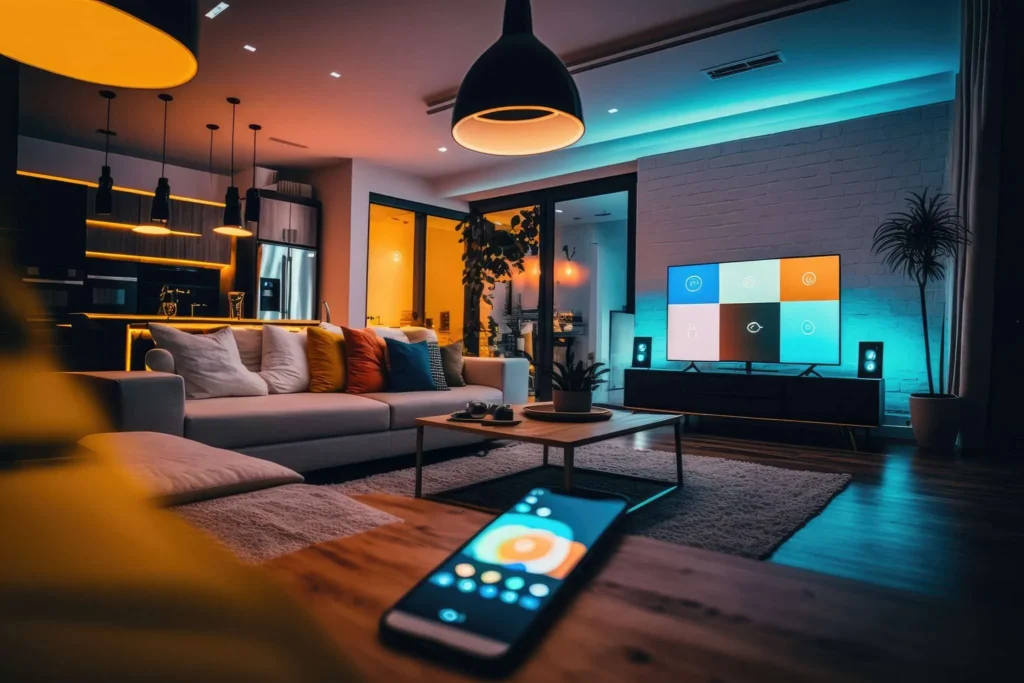
The “Smart Era” began with X10 protocols, which sent data over existing electrical wiring. While revolutionary, it was plagued by electrical noise and unreliability. The current paradigm is defined by the decoupling of the “Control Plane” from the “Power Plane.” In a modern intelligent system, the signal that tells a light to dim is distinct from the electricity that powers it. This evolution allows for “Scenario-Based Lighting,” where a single command can reconfigure the entire visual profile of a home. However, this increased capability introduces new failure points, specifically in the handshake between local hardware and cloud-based logic.
Conceptual Frameworks and Mental Models
To avoid systemic errors, practitioners should apply specific mental models:
-
The “Wife/Guest Compliance” Test: This framework insists that any smart system must be operable by a guest who has zero knowledge of the technology. If a visitor cannot turn on the bathroom light without an app or a manual, the system has failed.
-
The Circadian Alignment Model: This treats lighting as a biological input. Mistakes often occur when “Cool Blue” light (5000K+) is used in bedrooms at night, suppressing melatonin production. A successful system automates the transition from high-energy blue light in the morning to low-energy amber light in the evening.
-
The Hierarchy of Control: This model prioritizes local, physical control (switches) over voice control, which is prioritized over app control. App-based control is the least efficient interface for daily tasks and should be reserved for administrative configuration.
Key Categories of Implementation Failure
Failure in smart lighting projects can be categorized by the specific layer of the system that is compromised.
| Failure Category | Primary Cause | Symptom | Mitigation Strategy |
| Network Congestion | Too many Wi-Fi bulbs | Latency; devices going “offline” | Use a dedicated hub (Zigbee/Z-Wave) |
| Dimmer Incompatibility | Smart bulbs on analog dimmers | Flickering; buzzing; premature failure | Use smart switches or non-dimming circuits |
| Logic Conflicts | Overlapping automations | Lights turning on/off unexpectedly | Centralize logic in a single hub/platform |
| Color Metamerism | Low CRI ratings (under 90) | Colors look “muddy” or distorted | Standardize on high-CRI, single-brand bins |
| Signal Occlusion | Metal switch boxes; stone walls | Intermittent connectivity | Use repeaters or wired backhaul hubs |
Realistic Decision Logic
A critical decision point is whether to use “Smart Bulbs” or “Smart Switches.” Generally, smart bulbs are appropriate for lamps and accent lighting where color-changing (RGB) is desired. Smart switches are the definitive choice for built-in overhead lighting, such as recessed cans or chandeliers, as they maintain the expected physical interface and can control “dumb” bulbs with greater reliability.
Detailed Real-World Scenarios and Consequences
Scenario 1: The Kitchen Flickering Paradox
A homeowner installs high-end smart LEDs into a kitchen circuit controlled by an old “leading-edge” analog dimmer.
-
The Consequence: The LEDs flicker violently at low dimming levels because the smart driver inside the bulb is fighting the “chopped” voltage from the wall switch.
-
The Fix: Replace the analog wall dimmer with a smart switch that provides a constant 120V to the bulb and sends dimming commands digitally.
Scenario 2: The Security Logic Loop
An outdoor motion sensor is set to turn on the porch light, but a separate “Dusk-to-Dawn” automation is set to keep the light off during certain hours.
-
The Consequence: The light “stutters” or fails to activate during a security event because two conflicting sets of logic are fighting for control of the same node.
-
Secondary Effect: This increases wear on the LED driver and creates a vulnerability in the home’s defensive perimeter.
Planning, Cost, and Resource Dynamics
The financial planning for smart lighting often fails because it ignores the “Cost of Maintenance.”
| Expense Tier | Component | Variability Factor |
| Infrastructure | Neutral wiring in switch boxes | Requires electrician labor in older homes |
| Logic Center | Bridge/Hub | Proprietary vs. Open-source (Home Assistant) |
| Terminal Nodes | Bulbs/Switches | Price vs. CRI and Dimming Quality |
| Operational | Electricity & Standby Power | “Phantom load” of 50+ connected devices |
Opportunity Cost: Choosing the cheapest $10 Wi-Fi bulbs over $40 Zigbee switches may save $300 upfront, but the cost of the owner’s time spent “reconnecting” dropped devices over the next two years will far exceed that initial saving.
Support Systems: Hubs, Bridges, and Protocols
The stability of the system is entirely dependent on its backbone. Common smart lighting mistakes often involve the absence of a dedicated bridge. While “Hubless” Wi-Fi bulbs are marketed as easier, they place a significant burden on the 2.4GHz spectrum, which is already crowded by microwaves and older laptops.
Support systems should include:
-
Dedicated Bridges: (e.g., Philips Hue Bridge or Lutron Caseta Bridge) which use clear, non-congested frequencies.
-
Neutral Wire Extenders: In older homes lacking a neutral wire, specialized switches (like Lutron’s PD-6WCL) are required to avoid “leakage” through the bulb.
-
Local API Access: Ensuring that if the internet goes down, your light switches still work within the local network.
-
Scene Controllers: Physical buttons that trigger multiple lights, reducing the need for voice commands or app navigation.
Risk Landscape and Compounding Failure Modes
The “Taxonomy of Risk” in smart lighting includes both digital and physical threats.
-
“Ghost Switching”: When a cloud server update causes all lights in a home to turn on at 100% brightness at 3 AM.
-
Firmware Bricking: A failed update that renders a $60 switch permanently unresponsive.
-
Network Infiltration: Using an unpatched smart bulb as an entry point into the home network.
-
Heat Stress: Installing smart bulbs in “fully enclosed” fixtures, which traps heat and destroys the sensitive electronics in the base of the bulb.
Governance, Maintenance, and Long-Term Adaptation
Smart lighting is not a “install and forget” utility. It requires a governance structure.
Annual System Checklist:
-
Check for “Zombies”: Identify devices that have disconnected from the network and re-pair them.
-
Update Firmware: Ensure all bridges and switches are patched against security vulnerabilities.
-
Scene Refinement: Adjust “Golden Hour” automations to account for seasonal shifts in sunset times if not using an astronomical clock.
-
Battery Audit: Replace batteries in wireless remote switches or motion sensors before they fail.
Measurement, Tracking, and Evaluation
How do we measure a “successful” smart lighting system?
-
Leading Indicator: “Latency under 200ms.” If the light doesn’t turn on almost instantly after a command, the system is technically deficient.
-
Lagging Indicator: “Monthly App Engagement.” Paradoxically, a successful system should have low app engagement. High app use suggests the automations and physical switches are not meeting the user’s needs.
-
Qualitative Signal: “The Guest Test.” Can a visitor navigate the home’s lighting without asking for instructions?
Common Misconceptions and Industry Myths
-
“Smart bulbs save more energy than regular LEDs.” In fact, smart bulbs consume a small amount of “standby power” 24/7 to remain connected to the network.
-
“You need an app for everything.” The best smart homes use apps only for setup; daily life should be governed by sensors and physical switches.
-
“More lumens are always better.” Smart lighting’s true power is in low light—the ability to dim to 1% for night navigation.
-
“Color-changing (RGB) is a must-have.” Most users find that “Tunable White” (warm to cool) is far more useful than the ability to turn the living room neon purple.
Ethical and Practical Considerations
There is an ethical responsibility to avoid “Light Pollution” within the home and the community. Automated outdoor lighting should be shielded and dimmed after midnight to protect nocturnal wildlife and human sleep quality. Practically, property owners must consider the “Resale Value.” A home filled with highly proprietary, complex lighting that requires a specific account to operate can actually be a liability during a real estate transaction. Standardizing on protocols like “Matter” ensures the system remains interoperable for future owners.
Conclusion
The pursuit of intelligent illumination is a journey from simple toggles to complex, responsive environments. The common smart lighting mistakes outlined here are almost all rooted in a failure to respect the system as a whole. Success is not achieved through the sheer volume of connected devices, but through the deliberate, nuanced application of technology that enhances—rather than complicates—the fundamental human need for light. By prioritizing local control, standardized protocols, and biological alignment, we can create spaces that are not only “smart” but truly wise in their service to their occupants.