How to Avoid Outdoor Automation Hacking Risks: A Definitive Guide
How to avoid outdoor automation hacking risks. The proliferation of connected exterior systems—from high-definition perimeter surveillance and automated access gates to smart irrigation and landscape lighting—has fundamentally expanded the digital attack surface of the modern property. While interior smart home security often focuses on data privacy and voice-assistant eavesdropping, outdoor automation presents a unique set of physical-to-digital vulnerabilities. These systems are often installed in accessible locations, making them susceptible to hardware tampering, and they frequently rely on long-range wireless protocols that extend well beyond the physical boundaries of the estate.
Securing these assets requires a shift in perspective from traditional consumer convenience to professional-grade defensive architecture. We must recognize that every smart sprinkler controller or automated pool pump is a potential entry point into the wider home network. The “invisible” nature of these systems often leads to a dangerous complacency; once installed, they are rarely updated, monitored, or audited for security anomalies. This neglect creates a “set-and-forget” vulnerability that can be exploited by sophisticated actors to gain lateral access to sensitive personal or financial data stored on the primary network.
To effectively mitigate these threats, one must adopt a holistic approach that treats the outdoor environment as a hostile network zone. This involves the application of rigorous encryption standards, the physical hardening of hardware, and the implementation of network segmentation. This article serves as a definitive exploration of the technical strategies and governance models required to maintain a resilient exterior digital ecosystem. By analyzing the intersection of cybersecurity and physical infrastructure, we can define the parameters of a high-autonomy environment that is as secure as it is efficient.
How to avoid outdoor automation hacking risks
Understanding how to avoid outdoor automation hacking risks begins with the deconstruction of the “Convenience vs. Security” trade-off. In the consumer market, ease of installation is often prioritized over robust authentication. Many outdoor devices ship with default credentials or utilize outdated communication protocols that lack end-to-end encryption. A professional-grade plan rejects these shortcuts, insisting instead on a “Zero Trust” architecture where no device is trusted by default, regardless of its location on the property.
A common oversimplification is the belief that a strong Wi-Fi password is sufficient protection. In reality, outdoor hacking risks are multi-layered. An adversary might exploit a physical Ethernet port located in an unlocked outdoor cabinet to bypass the wireless layer entirely. Or, they might utilize a “Man-in-the-Middle” (MitM) attack to intercept unencrypted signals between a pool controller and its remote hub. The risk here is not just the loss of control over the pool’s temperature, but the use of that controller as a “pivot point” to access the owner’s private computers or security cameras.
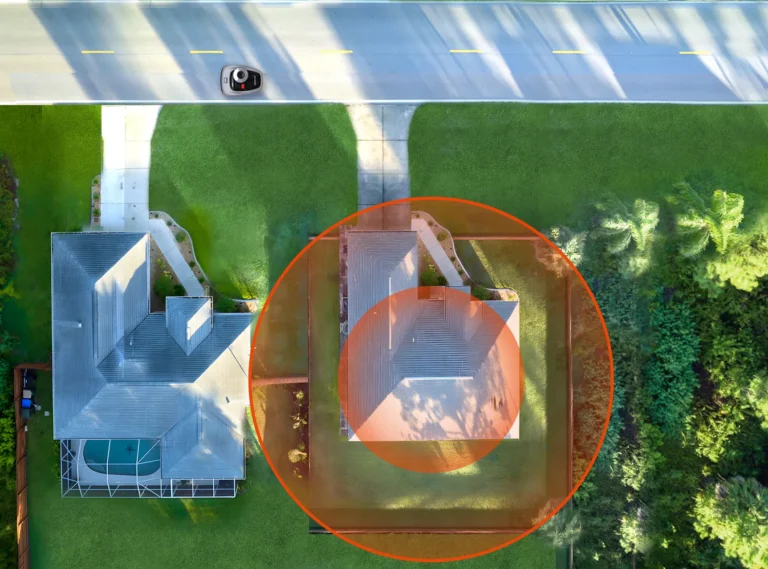
Furthermore, the “how” of security involves the management of “RF Spillage.” Wireless signals do not stop at the property line. Without proper antenna shielding or transmit-power management, a smart gate controller might broadcast its presence blocks away, inviting reconnaissance. A definitive security strategy addresses these signals at the source, utilizing directional antennas and frequency-hopping spread spectrum (FHSS) technology to minimize the footprint of the digital estate. It is this combination of physical shielding and logical segmentation that defines a master-level approach to exterior security.
The Systemic Evolution of Exterior Vulnerabilities
The history of outdoor automation began with localized, analog systems—clocks, timers, and mechanical switches that had no connectivity and, therefore, no remote hacking risk. The transition to digital systems in the early 2000s introduced the first “Serial” connections (RS-485), which were secure only by virtue of their obscurity and the requirement for physical access. The systemic revolution arrived with the integration of the Internet Protocol (IP). Suddenly, devices designed for the garden were speaking the same language as the devices in the server room.

This evolution has been asymmetrical. While the computing power of these devices increased, their security features often lagged. We moved from “Invisible and Analog” to “Visible and IP-Enabled” without the intervening step of “Hardened and Encrypted.” Today, we are in the era of “Cloud-Dependent Hardware,” where a vulnerability in a manufacturer’s central server can compromise thousands of individual outdoor systems simultaneously. This shift from localized risk to systemic, cloud-based risk demands a more rigorous approach to vendor selection and device isolation.
Conceptual Frameworks for Digital Defense
To navigate these complexities, estate managers should utilize the following mental models:
-
The Defense-in-Depth Model: This posits that no single security measure is foolproof. Instead, security is achieved through overlapping layers—physical locks on cabinets, VLAN segmentation for the network, and multi-factor authentication (MFA) for the control apps.
-
The Principle of Least Privilege: An outdoor sensor should only have the permissions it needs to function. A smart sprinkler has no reason to “talk” to a smart refrigerator or a home office printer. If a device is compromised, this framework ensures the damage is contained.
-
The Physical-Digital Bridge Logic: This framework treats every outdoor wire as a potential data cable. If a wire leads from an outdoor device to the interior of the house, it must be treated as a potential breach point, requiring galvanic isolation or encrypted couplers.
Key Categories of Vulnerable Exterior Systems
Security priorities vary significantly across different technological silos.
| System Category | Primary Hacking Risk | Countermeasure |
| Surveillance & Optics | Remote eavesdropping; feed hijacking | WPA3 encryption; local-only storage (NVR) |
| Access Control (Gates) | Replay attacks; unauthorized entry | Rolling code technology; physical bypass disabling |
| Hydrological (Irrigation) | Resource depletion; system sabotage | Network segmentation (VLAN); flow-limit alerts |
| Pool & Spa Systems | Hardware damage; chemical imbalances | Secure API tokens; physical lock-outs on pumps |
| Mesh Networking Nodes | Signal interception; lateral movement | Certificate-based authentication; hidden SSIDs |
Decision Logic: Cloud-Based vs. Local Control
A critical decision in avoiding hacking risks is whether to permit “Cloud Control.” While cloud apps are convenient, they introduce a third-party vulnerability. For high-security environments, “Local-Only” control—where the device can only be managed when the user is physically on the property’s network—is the superior choice. It eliminates the risk of an attacker halfway across the world gaining control of the property’s lighting or gates.
Detailed Real-World Scenarios and Attack Vectors
Scenario 1: The “Ghost” Gate Opening
An attacker uses a “SDR” (Software Defined Radio) to capture the signal from a smart gate remote and “replays” it later that night.
-
The Strategy: Transition to systems that use “Rolling Codes” or encrypted Bluetooth handshakes that cannot be replayed.
-
Failure Mode: If the manual “emergency release” for the gate is easily accessible from the street, the digital security is moot.
Scenario 2: Lateral Movement via the Sprinkler
A hacker finds an unpatched vulnerability in a smart sprinkler controller’s firmware. Once inside, they use the controller to scan the home’s internal network for unencrypted file shares.
-
The Strategy: Placing all outdoor automation on a “Guest Network” or a dedicated “IoT VLAN” that is physically and logically separated from the family’s computers.
-
Second-Order Effect: This requires a more sophisticated router/firewall but prevents a $200 sprinkler from compromising $100,000 in digital assets.
Planning, Cost, and Resource Dynamics of Security
Hardening an outdoor system involves both capital and operational expenditure.
| Investment Tier | Typical Security Features | Estimated Cost Delta |
| Standard | Default Wi-Fi; manufacturer cloud | Baseline |
| Hardened | VLAN segmentation; WPA3; physical locks | +15% – 25% |
| High-Security | Local-only NVR; VPN-access; PoE-only | +40% – 60% |
Opportunity Cost: The cost of not implementing these measures is the “Recovery Debt.” If a system is hacked, the cost of forensic analysis, hardware replacement, and the loss of privacy far exceeds the upfront cost of a secure router and a few hours of professional configuration.
Tools, Strategies, and Support Systems
A professional plan to avoid hacking risks relies on several defensive tools:
-
VLAN-Capable Firewalls: To create an “air-gap” between the garden and the home office.
-
MAC Address Filtering: Ensuring only pre-authorized devices can join the network.
-
VPN (Virtual Private Network): For secure remote access without opening ports on the firewall.
-
Firmware Monitoring Software: To alert the owner the moment a manufacturer releases a security patch.
-
Shielded Ethernet Cable (STP): To prevent an attacker from “sniffing” data signals from a cable running through a garden bed.
-
Tamper-Evident Seals: Applied to outdoor enclosures to indicate if a hardware-level breach was attempted.
The Risk Landscape: A Taxonomy of Exploits
Hacking risks in the outdoor space can be categorized by their intent and method:
-
Denial of Service (DoS): Flooding a smart irrigation system with requests until it crashes, potentially leaving the lawn to die in a heatwave.
-
Credential Stuffing: Using passwords leaked from other websites to gain access to a pool or lighting app.
-
Physical Port Poisoning: Plugging a malicious device into an exposed RJ45 jack on a security camera to inject malware into the network.
Governance, Maintenance, and Long-Term Adaptation
Security is a process, not a product. An outdoor automation system must be governed by a strict lifecycle.
Quarterly Security Audit Checklist:
-
Password Rotation: Changing credentials for all exterior control hubs.
-
Firmware Review: Manually checking for updates on devices that do not auto-update.
-
Device Audit: Scanning the network to ensure no “rogue” devices have been added.
-
Physical Inspection: Checking that all outdoor conduits and cabinets remain intact and locked.
Measurement, Tracking, and Evaluation
How do we quantify “Security”?
-
Leading Indicators: The frequency of successful firmware patches and the “Uptime” of the IoT VLAN.
-
Lagging Indicators: The number of “Unrecognized Login” alerts and the results of annual “Penetration Tests” conducted by a security professional.
-
Documentation Example: A “Network Topology Map” that clearly shows the isolation points between the outdoor automation and the internal data servers.
Common Misconceptions and Oversimplifications
-
“My property is too small to be a target.” Hackers use automated scripts that scan the entire internet for vulnerabilities; they don’t care how big your house is.
-
“Wired systems are unhackable.” If a wire is accessible from the outside, it is a potential entry point for a hardware-level attack.
-
“I’ll know if I’ve been hacked.” Modern malware is designed to be “silent.” An outdoor controller might be compromised for months, acting as a data-mining node, without ever changing its behavior.
-
“Smart devices are safe if they’re from a big brand.” Many large brands outsource their software development to third parties, creating a “supply chain” risk that the consumer cannot easily see.
Ethical and Practical Considerations
There is an ethical dimension to “network hygiene.” A compromised outdoor device doesn’t just hurt the owner; it can be used as a “zombie” in a Botnet to attack other people or organizations. Practically, avoiding hacking risks is about protecting the “Sanctity of the Home.” The exterior of a property is the first line of defense; if the digital perimeter is soft, the physical perimeter is compromised.
Conclusion
The endeavor of how to avoid outdoor automation hacking risks is an exercise in strategic vigilance. It requires moving beyond the “plug-and-play” mentality and into a mindset of architectural integrity. The definitive security plan is one that acknowledges the inherent vulnerabilities of the outdoor environment and builds multiple, redundant layers of defense to mitigate them. As we continue to integrate more technology into our surroundings, the strength of our digital walls must match the beauty of our physical landscapes. Success is found in the system that remains invisible to the owner but impenetrable to the adversary, ensuring that automation remains a tool for freedom rather than a vulnerability for exploitation.