How to Avoid Robotic Mower Theft Risks: The Definitive 2026 Guide
The mass adoption of autonomous turf management has fundamentally altered the risk profile of the modern residential exterior. Unlike a traditional tractor or push mower, which remains secured behind a locked garage door for the vast majority of its lifecycle, a robotic mower is a high-value asset that must, by design, remain exposed and unattended for thousands of hours each season. This inherent vulnerability has created a new category of opportunistic crime, necessitating a shift from reactive mechanical security to a proactive, multi-layered defensive posture.
Designing a resilient protection strategy requires an understanding of the mower as both a physical object and a digital node. The financial loss of the hardware is often secondary to the systemic disruption caused by a theft event; a stolen mower represents a break in the autonomous maintenance cycle, often leading to rapid landscape degradation before a replacement can be procured and commissioned. Consequently, the property owner must move beyond simple “locks and alarms” to a more sophisticated architecture of deterrence and recovery.
True security in this domain is found at the intersection of environmental design, digital encryption, and behavioral protocols. By leveraging the same high-precision GPS and cellular telemetry used for navigation, a property owner can create a “virtual fortress” that renders the stolen unit effectively worthless to the perpetrator. This article serves as the definitive editorial reference for those seeking to implement professional-grade countermeasures, ensuring that the convenience of automation does not come at the cost of chronic insecurity.
How to avoid robotic mower theft risks
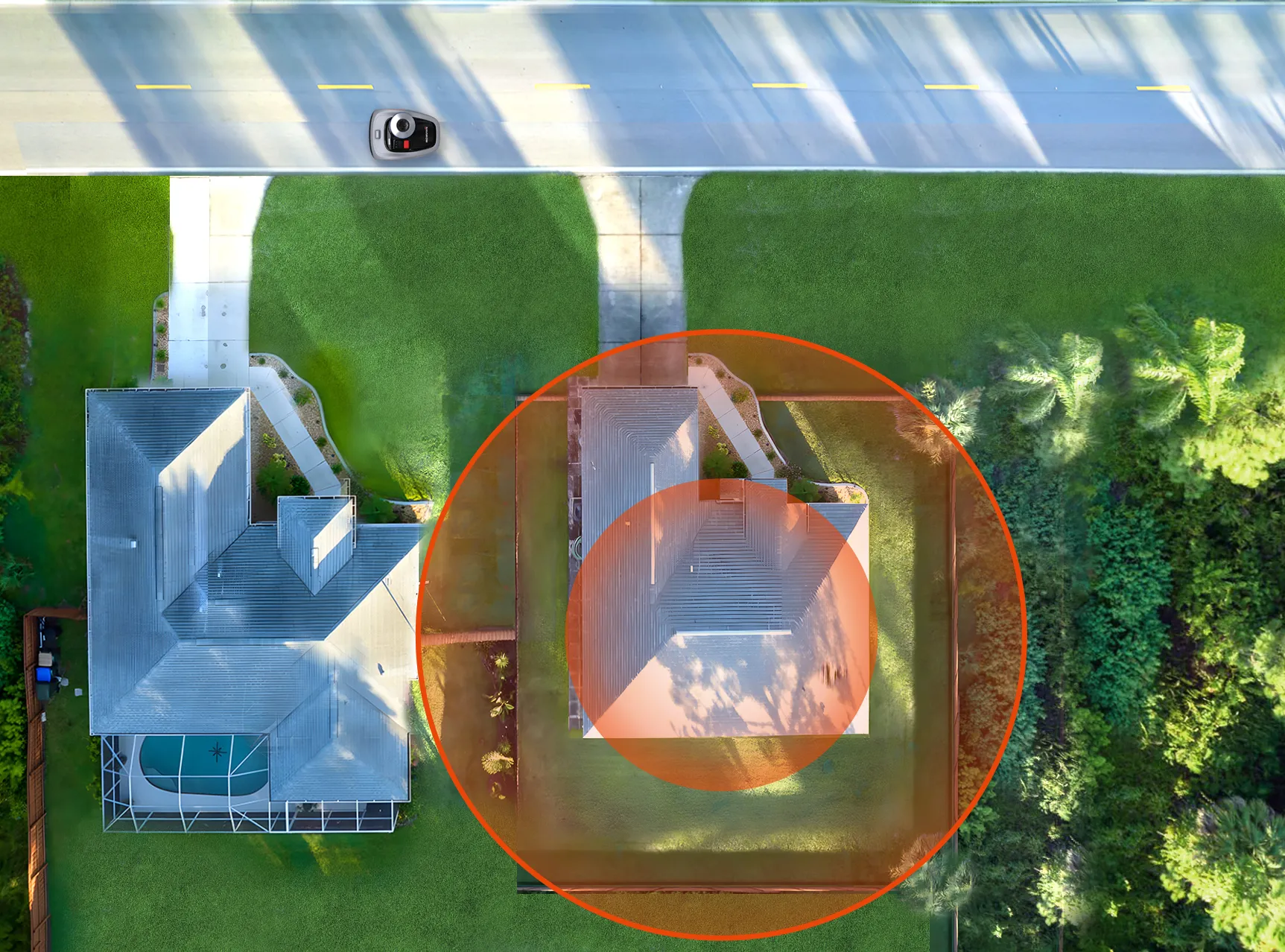
To effectively navigate how to avoid robotic mower theft risks, one must first discard the notion that physical tethering is a sufficient solution. In a professional context, security is defined by “Asset Devaluation”—the process of making the stolen item so difficult to use or resell that the incentive for the theft is removed entirely. Modern autonomous mowers are essentially computers with wheels; their value is locked behind proprietary software and unique pairing codes. A premier security plan emphasizes these digital barriers, ensuring that a unit removed from its home “Geofence” becomes a non-functional brick.
A frequent oversimplification in the consumer market is the reliance on the built-in alarm. While a high-decibel siren may deter a casual thief, professional “theft-for-parts” operations are often undeterred by noise. A sophisticated approach involves “Deep Telemetry Tracking,” where the mower utilizes an independent cellular backhaul to report its coordinates even when the main battery is disconnected. Understanding how to avoid robotic mower theft risks requires a focus on these redundant systems, ensuring that “Recovery Logic” is baked into the initial system configuration.
Furthermore, environmental psychology plays a critical role in asset protection. A mower that operates in plain view of a public sidewalk is a higher-risk target than one whose charging station is concealed within a “Hidden Zone.” By using the mower’s zone-management software, property owners can schedule “High-Visibility” mowing for times when the residents are home, while keeping the mower in “Secure Sleep” or hidden in the backyard during high-risk hours. Security is not a single product; it is a calculated modulation of visibility and accessibility.
The Contextual Evolution of Asset Protection
Historically, securing outdoor equipment meant heavy chains and padlocks. This “Static Security” era was effective but incompatible with the needs of a robot that must move freely across the property. The first generation of robotic mowers (early 2000s) introduced basic PIN codes, but these were easily bypassed by factory resets. By 2015, the “Connectivity Era” introduced GPS geofencing, allowing a mower to disable itself if it traveled outside a predefined perimeter.

In 2026, we have entered the era of “Cloud-Bound Identity.” Modern units are tied to a global registry. If a mower is reported stolen, the manufacturer can blackhole the serial number across all servers, preventing any future firmware updates or app connectivity. This shift from physical to digital enforcement has radically changed the risk landscape. Theft is no longer about stealing a tool; it is about attempting to steal a locked account, which is significantly more difficult for the average street-level criminal to monetize.
Conceptual Frameworks and Mental Models for Security
Managing the security of an autonomous fleet requires specific mental models to prioritize defensive spending:
-
The “Honeypot” Risk Model: This framework suggests that the charging station—the most visible part of the system—is the primary target indicator. If the charging station is visible, the mower’s presence is confirmed. Concealing the base is the first step in “Signature Reduction.”
-
The Layered Defense (OODA Loop): Observe, Orient, Decide, Act. Your security should force the thief to spend more time in the “Observe” and “Orient” phases. Signs that mention “GPS Tracking” or “Police Monitored” create psychological friction that often leads to the thief deciding to abort.
-
The “Parts vs. Unit” Value Split: One must assume a thief may not want the mower for use, but for its expensive lithium-ion battery and brushless motors. This requires physical hardening, such as tamper-resistant screws that make it impossible to strip the unit quickly in the field.
Key Categories of Theft Deterrence Infrastructure
Selecting the right combination of defenses involves a breakdown of mechanical, digital, and environmental categories.
| Category | High-Performance Standard | Primary Benefit | Reliability Factor |
| Digital Lock | PIN + Biometric App Pairing | Prevents unauthorized operation | High (Software-bound) |
| Geospatial | GPS/GNSS Geofencing | Automated lockdown outside the zone | High (Satellite-dependent) |
| Acoustic | Tilt-Sensing Alarm | Immediate local deterrence | Moderate (Noise can be ignored) |
| Concealment | Camouflaged Charging Garage | “Out of sight, out of mind.” | High (Prevents targeting) |
| Active Tracking | Independent eSIM / Cellular | Real-time recovery data | High (Works without Wi-Fi) |
| Physical | Ground-Anchored Docking | Prevents “Grab and Go” of the base | Moderate (Can be cut) |
Realistic Decision Logic
A critical decision for the property owner is whether to invest in Third-Party Tracking or rely on the manufacturer’s built-in GPS. Manufacturer GPS is often tied to the mower’s main power rail; if a thief removes the battery, the tracking stops. Professional-grade protection often involves a secondary, hidden “Passive Tracker” with its own 3-year battery life, ensuring that the unit can be located even if it is partially dismantled.
Detailed Real-World Scenarios and Constraints
Scenario 1: The Urban Corner Lot
A property with high foot traffic and low fences.
-
The Strategy: Utilization of “Night-Only” or “In-Sight” schedules. The mower only runs when residents are physically present or when the yard is under heavy floodlight surveillance.
-
The Fix: Installing a “Smart Garage” with a motorized door that only opens when the mower is departing for a task.
-
Failure Mode: Leaving the mower in the front yard during a vacation without adjusting the schedule to a “Secure” mode.
Scenario 2: The Large Unfenced Estate
A multi-acre property where the mower is often 500+ feet from the house.
-
The Strategy: Heavy reliance on “LoRa” or “Long-Range Cellular” geofencing.
-
The Fix: Using a “Radio-Silent” mower that doesn’t advertise its SSID, making it harder for tech-savvy thieves to find the unit using a signal sniffer.
-
Constraint: Response time for local law enforcement is likely slow; focus must be on “Verification and Recovery” rather than “Physical Prevention.”
Planning, Cost, and Resource Dynamics
The cost of security should be viewed as an “Insurance Premium” that protects the $3,000–$10,000 investment in the mower.
| Expense Tier | Typical Component | Installation Complexity | Long-Term Value |
| Low Cost | Decals, Signage, PIN lock | Low | High Psychological Deterrence |
| Moderate Cost | Protective Garage, Ground Anchors | Medium | Prevents “Grab and Go” |
| High Cost | Independent LTE Tracker, CCTV Integration | High | Ensures High Recovery Probability |
| Administrative | Theft-Specific Insurance Rider | Low | Full Financial Protection |
Opportunity Cost: Choosing to save $200 by opting for a mower without “Cellular GPS” is a common error. In the event of a theft, the cost of the cellular subscription over five years is negligible compared to the 100% loss of the asset.
Tools, Strategies, and Support Systems
A definitive plan for how to avoid robotic mower theft risks incorporates these support strategies:
-
Tamper-Proof Hardware: Replacing standard hex or Phillips screws with “Torx-Security” pins to prevent thieves from quickly removing the GPS or battery module.
-
Unique Aesthetic Marking: Using “Micro-Dot” DNA paint or laser-etching the owner’s details into the chassis. This makes the unit “Radioactive” on the second-hand market.
-
VLAN Network Isolation: Ensuring the mower is on a separate network prevents a thief from using the stolen mower to access the home’s primary data if they attempt to connect to it.
-
Secondary “Dead” Battery: Some professional installers place a decoy battery in the main compartment while hiding the real power source deeper in the frame to confuse those attempting to disable the unit.
-
Smart Lighting Integration: Linking the mower’s “Lift Sensor” to the home’s exterior floodlights—if the mower is picked up, the entire property illuminates.
Risk Landscape and Failure Modes
Even the most advanced systems have “Vulnerability Gaps” that must be acknowledged:
-
The “Signal Shielding” Risk: Thieves can place the mower in a foil-lined bag or a metal van, effectively killing the GPS and Cellular signal (a Faraday cage effect). This makes “Immediate Notification” the most important feature—you must know the moment it loses signal.
-
Social Engineering: Some thieves pose as “Service Technicians,” picking up mowers in broad daylight while wearing high-visibility vests. Clear communication with neighbors about who is authorized to handle the mower is essential.
-
The “Base Station” Theft: Often, thieves steal the charging station along with the mower to have a “Complete Set” for resale. Anchoring the base to a concrete pad is as important as securing the mower itself.
Governance, Maintenance, and Long-Term Adaptation
Security is not a static state; it requires a routine “Defensive Audit.”
Layered Maintenance Checklist:
-
Monthly: Test the “Lift Alarm.” Pick up the mower to ensure the siren sounds and the smartphone notification arrives within seconds.
-
Biannually: Update the “Geofence” boundaries if landscaping has changed. Check the battery health of the secondary tracker.
-
Annually: Review the “Manufacturer’s Theft Log.” Ensure the mower’s firmware is updated to the latest security patch.
-
Documentation: Maintain a “Theft Recovery Packet” including the serial number, high-resolution photos of unique markings, and proof of purchase in a secure cloud folder.
Measurement, Tracking, and Evaluation
How do we measure the effectiveness of a theft-prevention plan?
-
Leading Indicators: “Attempted Breaches”—finding the mower moved but still on the property, or finding the garage door tampered with.
-
Lagging Indicators: Total loss events over the lifecycle of the fleet.
-
System Health: “Heartbeat” monitoring—the frequency with which the mower checks in with the server. A “Missing Heartbeat” should trigger an immediate high-priority alert.
Common Misconceptions and Industry Myths
-
“Thieves won’t want it because they don’t have the charger.” False; chargers can be bought easily online. The deterrent must be the “Locked Serial Number,” not the lack of accessories.
-
“GPS is 100% accurate.” No, GPS can drift by 10-20 feet, especially near tall buildings. Geofences should have a “Buffer Zone” to avoid false alarms.
-
“A hidden mower is safe.” Not if the thief follows the “mowing lines” or the sound of the blades. Concealment must be paired with active tracking.
-
“The police will find it.” Law enforcement rarely prioritizes small appliance theft. The owner must provide “Actionable Intelligence” (a live GPS pin) to ensure a recovery attempt.
Ethical, Practical, or Contextual Considerations
When implementing high-decibel alarms, property owners must consider “Acoustic Nuisance” laws. A false alarm at 3:00 AM can lead to neighbor friction and potential fines. Editorial judgment suggests that “Silent Alerts” (sent to a phone or a professional monitoring service) are often more effective and socially responsible than loud sirens. Furthermore, the use of “Invisible Markers” (UV ink) is a more ethical way to identify property than defacing the unit with permanent markers, preserving the resale value for when the owner chooses to upgrade.
Conclusion
The security of an autonomous mower is a study in “Systemic Resiliency.” By acknowledging that the mower is an exposed asset, property owners can move away from the frustration of physical barriers toward the precision of digital governance. Success in avoiding robotic mower theft risks is found in the combination of “Low-Visibility” placement and “High-Fidelity” tracking. When a unit is properly integrated into a home’s security ecosystem—rendered worthless by encryption and easily tracked by redundant telemetry—it ceases to be an attractive target. The goal is to create an environment where the mower can perform its duty in peace, protected by a silent, invisible architecture of defense.