How to Manage Automated Pool Chemistry: The Definitive 2026 Reference
The pursuit of a perfectly balanced aquatic environment has historically been an exercise in manual vigilance, requiring the homeowner to act as a part-time laboratory technician. In the American residential market, where the backyard pool is often a significant capital investment and a focal point for family wellness, the stakes of water quality are remarkably high. Improperly balanced water is not merely an aesthetic grievance; it is a corrosive force that can degrade expensive equipment, compromise structural integrity, and introduce biological risks to swimmers.
As we move through 2026, the transition from manual “bucket-and-test-strip” maintenance to autonomous, sensor-driven governance has reached a level of technological maturity. Modern automation systems now offer the promise of “Passive Perfection”—the ability to maintain a sanitized, crystal-clear environment with minimal human intervention. However, this shift introduces a new layer of complexity. The challenge is no longer just about chemical ratios, but about managing the digital and mechanical infrastructure that monitors those ratios.
To effectively oversee these systems, one must adopt a perspective that treats the pool as a dynamic, living ecosystem. Weather patterns, bather loads, and local source water chemistry all act as external stressors that the automated system must navigate. A successful management strategy does not involve “setting and forgetting” the equipment; rather, it requires an editorial approach to system oversight, ensuring that the sensors remain calibrated and the mechanical feed pumps remain robust. This definitive reference explores the technical strategies and logical frameworks necessary to maintain high-performance aquatic environments.
How to manage automated pool chemistry
To master how to manage automated pool chemistry, one must first dismantle the misconception that automation is a substitute for understanding. In a professional context, excellence is defined by “Analytical Oversight.” This means the property owner or manager understands that the automation is a feedback loop: sensors read the water (ORP and pH), a controller processes that data, and a feeder delivers the necessary adjustment. If any of these three stages are compromised—by a dirty sensor, a software glitch, or a clogged injector—the entire system fails.
A common oversimplification in this field is the reliance on ORP (Oxidation-Reduction Potential) as the sole metric for sanitation. While ORP measures the “work value” of the chlorine, it is notoriously sensitive to fluctuations in pH and cyanuric acid levels. Consequently, a premier management strategy involves “Cross-Verification.” This requires the system to be periodically checked against manual DPD (Diethyl-p-phenylenediamine) tests. The “best” automated setups are those that allow for “Delta Tracking”—monitoring the difference between what the sensor sees and what a liquid test confirms—and adjusting the sensor offset accordingly.
Furthermore, the “Smart” aspect of modern pool management relies on “Proactive Dosing.” Unlike manual methods that often lead to a “Yo-Yo” effect (over-chlorinating to compensate for a drop), automation allows for “Micro-Dosing.” By delivering tiny amounts of acid or chlorine throughout the day, the system maintains a steady state that is far healthier for the pool’s surface and the swimmers’ skin. Mastering this involves calibrating the “Lockout Time” and “Feed Limits” on the controller to prevent a runaway feed in the event of a sensor error.
Contextual Background: The Evolution of Aquatic Governance
The trajectory of American pool maintenance has progressed from the “Alchemical Era” to the “Autonomous Era.” For much of the 20th century, pool chemistry was a manual, often imprecise, ritual. Homeowners added dry chemicals by hand, often leading to spikes in alkalinity or chlorine that were uncomfortable and corrosive. This era relied on the human eye to detect “green water” before taking reactive measures.
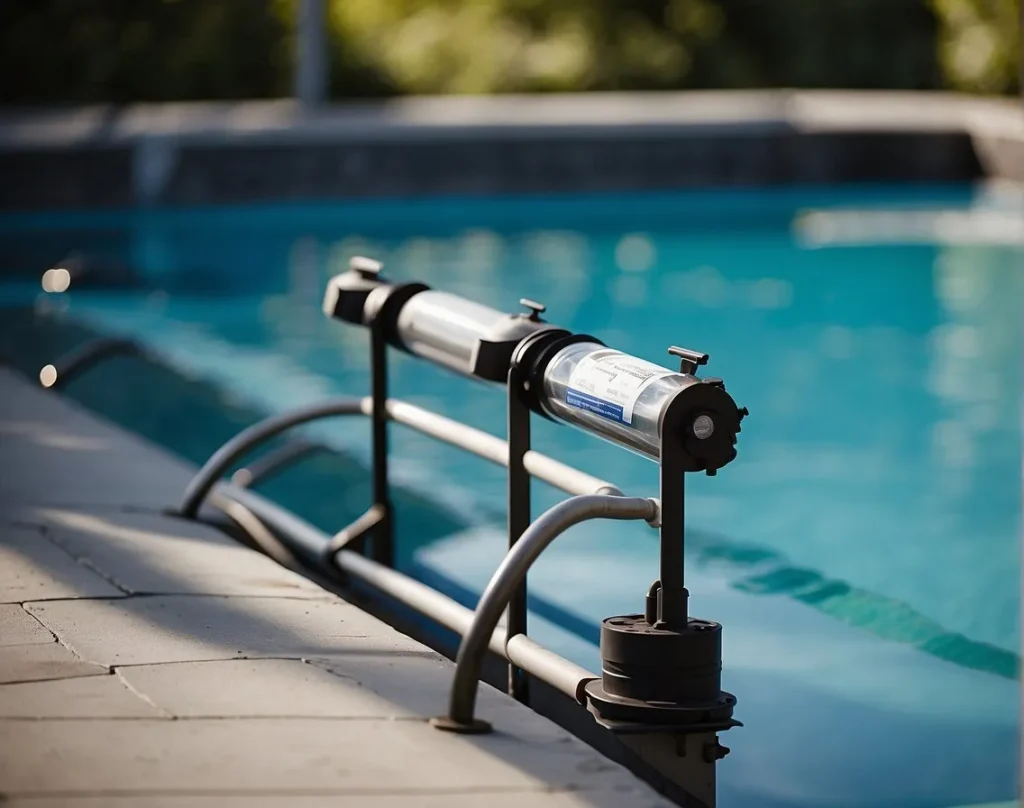
The 1990s and 2000s introduced the first wave of salt-chlorine generators (SCGs) and basic pH controllers. While these reduced the need for manual chlorine handling, they were “blind” systems—they produced chlorine at a set percentage regardless of whether the pool actually needed it. We have now entered the era of “Algorithmic Sanitation.” Modern systems integrate flow meters, temperature sensors, and high-fidelity probes that communicate with home automation hubs. This evolution has turned the pool from a high-maintenance chore into a self-regulating utility.
Conceptual Frameworks and Mental Models
Managing high-complexity aquatic systems requires specific mental models to prevent catastrophic imbalances:
-
The Langelier Saturation Index (LSI) Model: This is the bedrock of water balance. Rather than looking at pH or Calcium Hardness in isolation, the LSI model views them as a single score. A score of 0.0 is perfect; below -0.3 is corrosive, and above +0.3 leads to scale. Automation should be tuned to maintain a “Neutral LSI” across varying temperatures.
-
The “Feedback Loop” Integrity: If the sensor (input) is wrong, the chemical feed (output) will be dangerous. This framework dictates that the most expensive part of the system is the one that deserves the most frequent cleaning—the probes.
-
The Principle of Redundancy: Automation manages the day-to-day, but it cannot handle “Shock” events like a heavy rainstorm or a high-occupancy pool party. A manual “Override Protocol” must always be part of the plan.
Key Categories of Automation Infrastructure
Building a robust automated environment requires selecting the right “Dosing Architecture.”
| Category | Primary Hardware | Best For | Main Trade-off |
| Salt Generation | Electrolytic Cell | Residential comfort; soft feel | High pH drift; cell scaling |
| Liquid Dosing | Peristaltic Pumps | Precision pH & Chlorine control | Acid fumes; tube wear |
| Erosion Feeders | Solenoid-controlled tablet bins | High-volume sanitation | Cyanuric acid buildup |
| CO2 Injection | Gas regulators/diffusers | Commercial pH management | Tank refills; no alkalinity impact |
| UV/Ozone | High-output lamps/corona discharge | Secondary sanitation | No residual; high electrical draw |
Realistic Decision Logic
A critical decision for the homeowner is the choice between ORP-driven and PPM-driven (Parts Per Million) automation. ORP is more reactive to the effectiveness of the chlorine, making it the professional choice for commercial pools. However, for residential salt pools, a “Constant Output” with a seasonal timer is often more stable and less prone to sensor-related “death spirals.”
Detailed Real-World Scenarios and Environmental Stressors
Scenario 1: The High-Temperature “Thermal Spike”
In regions like Arizona or Texas, pool water can exceed 90°F.
-
The Effect: Chlorine demand triples, and the LSI shifts toward scale.
-
The Management Strategy: Automation must be programmed with “Temperature Compensation.” As water warms, the system should automatically increase the salt-cell output or pump runtime.
Scenario 2: The “Post-Storm” Alkalinity Crash
A heavy American rainstorm is often acidic, which can plummet the pool’s pH and alkalinity.
-
The Effect: Automation sensors (ORP) may report “High Chlorine” because the low pH makes the existing chlorine super-active, even if the actual PPM is low.
-
The Management Strategy: The user must intervene with manual alkalinity buffers. Automation cannot yet effectively “dose” dry baking soda or soda ash to raise alkalinity.
Planning, Cost, and Resource Dynamics
The financial commitment to automated chemistry involves significant upfront capital but yields “Equipment Longevity” as its primary ROI.
| Expense Tier | Component | Price Range | ROI Driver |
| Core Controller | Sensing & Logic Hub | $1,500 – $4,500 | Prevents equipment corrosion |
| Dosing Hardware | Pumps or Salt Cells | $800 – $2,500 | Reduces manual labor |
| Annual Consumables | Probe replacement; reagents | $300 – $600 | Maintains sensor accuracy |
| Maintenance | Professional calibration | $400 – $800 | Ensures system warranty |
Opportunity Cost: Failing to invest in a pH controller while using a salt system often leads to high-pH water that “scales” the pool surface, necessitating an expensive ($5,000+) acid wash or resurfacing within five years.
Tools, Strategies, and Support Systems
The backbone of how to manage automated pool chemistry relies on these technical support layers:
-
Peristaltic Pump Maintenance: These pumps use a squeeze-tube that must be replaced annually. A burst tube can dump an entire gallon of muriatic acid onto the equipment pad.
-
Probe Storage: Sensors must never be allowed to dry out. During winterization, they must be stored in “Probe Storage Solution” (pH 4.0 or KCl).
-
Flow Switches: A critical safety device. It ensures the chemical pumps only run when the main pool pump is moving water, preventing a “Gas Pocket” explosion in the plumbing.
-
Cyanuric Acid (CYA) Governance: High CYA “locks” chlorine. For automated ORP systems, CYA must be kept low (20–40 PPM) to ensure the sensors can read the water accurately.
Risk Landscape and Failure Modes
The “Taxonomy of Failure” in pool automation is often compounding:
-
The “Chlorine Demand” Spiral: If the water has high nitrates or phosphates, the system will keep feeding chlorine to reach its “Set Point,” but it will never get there, eventually running the pump dry or burning out the salt cell.
-
Electrical Grounding Issues: “Stray Current” in the water can interfere with the millivolt readings of the pH and ORP probes, leading to wild fluctuations in the reported data.
-
The “Empty Tank” Risk: If a pH-minus tank goes empty, the salt system will keep raising the pH, rendering the chlorine ineffective and allowing algae to bloom despite “High” production levels.
Governance, Maintenance, and Long-Term Adaptation
Automated water management is a “Mechanical Utility” that requires a strict review cycle.
Layered Maintenance Checklist:
-
Weekly: Visually inspect the chemical tanks and “check-valve” injectors for calcium clogs.
-
Monthly: Clean the probes in a mild acid solution to remove oils and scale. Calibrate the system against a high-quality liquid test kit.
-
Seasonally: Inspect the salt-cell plates for “Calcium Bridging.” Replace the squeeze-tubes on the acid pumps.
-
Annually: Replace the pH and ORP probes. These are “Consumable” items with a 12–24 month lifespan.
Measurement, Tracking, and Evaluation
A successful management plan is documented through “Water Stability KPIs”:
-
Leading Indicators: ORP/pH “Drift Rate” and “Feed Cycle Duration.”
-
Lagging Indicators: Total chemical consumption per month; LSI average score.
-
Qualitative Signal: The “Equipment Health” check—if the heater manifold shows signs of pitting, the automated balance is failing.
Common Misconceptions and Industry Myths
-
“Salt pools are chlorine-free.” Salt pools are chlorine pools; they just manufacture their own chlorine on-site via electrolysis.
-
“If the water is clear, it’s balanced.” Clear water can be highly acidic or scale-forming. Clarity is a measure of filtration, not chemistry.
-
“The sensors are forever.” Sensors are chemical-electrical devices that “wear out” like batteries. They must be replaced regularly.
-
“Automation means I don’t need a pool professional.” Automation makes the professional’s job more precise; it does not replace the need for seasonal expertise.
Conclusion
The successful transition to autonomous aquatic care is a balance of mechanical trust and intellectual skepticism. By understanding how to manage automated pool chemistry, property owners can transform a traditionally laborious task into a streamlined, scientific process. The ultimate reward is not just a crystal-clear pool, but the preservation of the pool’s infrastructure and the health of those who use it. As sensing technology becomes more resilient and AI integration improves predictive dosing, the “Passive Pool” will move from a luxury ideal to a standard requirement for modern residential living.