Luxury Smart Pools USA: The Definitive Guide to Autonomous Aquatic Design
The integration of high-performance aquatic engineering with decentralized digital logic has fundamentally redefined the concept of the domestic oasis. In the American luxury market, a swimming pool is no longer a static vessel of treated water; it has become a sophisticated, autonomous machine—an “aquatic computer” capable of regulating its own chemistry, thermal profile, and aesthetic presentation with millimetric precision. This shift from manual maintenance to “Integrated Pool Governance” represents a significant leap in property management, moving away from reactive skimming and towards proactive environmental control.
However, the rapid acceleration of pool technology in the United States has outpaced the general consumer’s understanding of the underlying infrastructure. A truly sophisticated installation requires a deep synthesis of fluid dynamics, electrical engineering, and network security. When we discuss the upper echelons of residential water features, we are looking at systems where the hardware is “Industrial-Grade” but the interface is “Consumer-Elegant.” The goal is a state of “Silent Autonomy,” where the pool functions flawlessly without requiring the owner to understand the complex telemetry occurring beneath the coping.
Achieving this level of mastery demands an analytical approach to the pool’s lifecycle—from the hydraulic efficiency of variable-speed pumps to the secure integration of cloud-based control hubs. In the context of the American luxury estate, the pool must also be resilient to varying climatic stressors, from the intense UV index of the Mojave Desert to the deep freeze cycles of the Northeast. This definitive reference explores the technical requirements, strategic planning, and operational nuances necessary to engineer and maintain a world-class aquatic asset.
luxury smart pools usa
To understand the current state of luxury smart pools usa, one must look beyond the ability to change LED colors via a smartphone. The true hallmark of a high-end system is “Chemical Autonomy.” Traditional pools rely on “Batch Processing”—adding a large amount of chlorine or acid once a week and hoping the levels remain stable. In a luxury smart environment, the system utilizes “Real-Time Potentiometry.” Specialized sensors (ORP and pH probes) monitor the water every second, injecting micro-doses of chemicals through peristaltic pumps to maintain a “Perfect Neutrality” that is impossible to achieve manually. This results in water that is not only safer but significantly gentler on the skin, eyes, and high-end stone finishes.
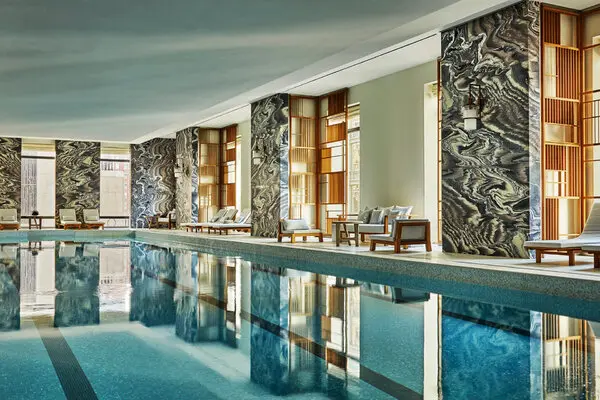
Another defining characteristic of luxury smart pools usa is “Hydraulic Intelligence.” High-performance pools utilize variable-speed pumps (VSPs) that are digitally tethered to the pool’s overall demand. If the system is merely filtering water, the pump might run at a whisper-quiet 800 RPM. If the infinity edge or waterfall is activated, the system ramps up to 3450 RPM instantly. This logic-based flow management reduces energy consumption by up to 90% while significantly extending the lifespan of the filtration media. The “Smart” aspect lies in the system’s ability to calculate the “Total Dynamic Head” (resistance) and adjust its output to maintain optimal turnover without overstressing the plumbing.
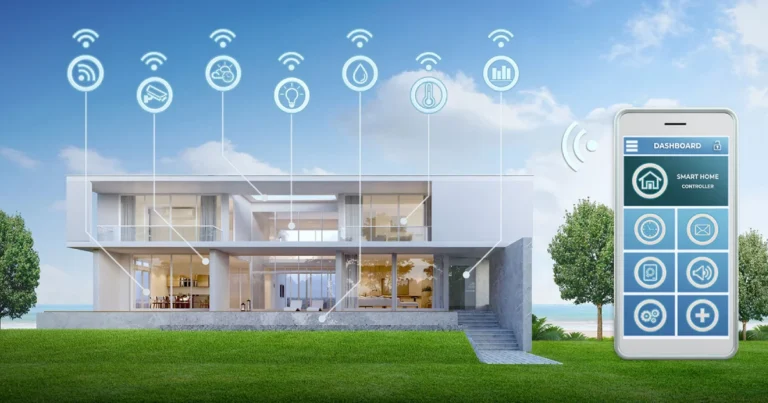
Furthermore, the “Smart” pool must be viewed as a node in the wider “Internet of Landscapes.” In the United States, luxury installations are increasingly integrated with home automation hubs like Crestron, Savant, or Control4. This allows the pool to “talk” to other systems. For example, when the outdoor audio system plays a “Party” playlist, the pool’s laminar jets can be programmed to synchronize their arcs with the beat, or the pool heater can be triggered automatically when a guest room’s occupancy sensor is activated. This level of cross-system logic is what separates a standard automated pool from the elite tier of aquatic engineering.
Contextual Background: The Evolution of the American Pool
The American swimming pool has moved through three distinct eras: the Era of Masonry, the Era of Automation, and the current Era of Intelligence. In the mid-20th century, a luxury pool was defined by its size and the quality of its tile work. Mechanical clocks and manual valves were the only “controls” available. The 1990s brought the first generation of remote controls—handheld waterproof devices that could turn on a light or a heater, but lacked any feedback loop. You could tell the heater to turn on, but the device couldn’t tell you if it actually succeeded.
In 2026, we are in the era of “Bi-Directional Telemetry.” Every component in the equipment pad—the pump, the heater, the salt cell, and the valves—is communicating its status to the cloud. This allows for “Remote Diagnostics,” where a service company in a different state can identify a failing capacitor in a pump motor before the homeowner even notices a change in water flow. The shift is from a system that is “Controlled” to one that is “Monitored and Self-Optimizing.”
Conceptual Frameworks and Mental Models
Navigating the complexities of high-end water features requires specific mental models to ensure long-term resilience:
-
The “Closed-Loop” Biological Model: Treat the pool as a living organism. If you change one variable (temperature), it affects another (chemical demand). A smart system must manage these as an interconnected web, not as isolated tasks.
-
The “Equilibrium” Strategy: The goal is never “More Chemicals”; the goal is “Balance.” A smart pool seeks the point of equilibrium where the water is naturally stable, using the minimum amount of intervention necessary to maintain sanitation.
-
The “Redundancy” Protocol: In a high-tech pool, “Digital” is the primary control, but “Manual” must be the fail-safe. Every automated valve should have a manual override handle, and every smart pump should have a local keypad. Technology should enhance convenience, not create a single point of failure.
Key Categories of Autonomous Aquatic Systems
Building a premier pool requires an audit of several critical subsystems.
| Category | High-Performance Solution | Value Driver | Maintenance Impact |
| Sanitation | Ozone + UV-C + Salt | “Drinking Water” quality | Reduces chemical handling by 80% |
| Heating | Hybrid Heat Pump + Gas | Energy efficiency | Optimizes BTU cost in real-time |
| Cleaning | In-Floor Cleaning Systems | Aesthetic invisibility | Eliminates “Robot” clutter |
| Covers | Automated Slatted Covers | Safety & Heat retention | Reduces evaporation by 95% |
| Surfaces | Glass Bead or Polished Pebble | Durability & Feel | Resistant to chemical etching |
| Control | Web-Based RS-485 Logic | Remote management | Allows for 24/7 “Pro” monitoring |
Realistic Decision Logic
A critical decision for the estate owner is between In-Floor Cleaning and Robotic Cleaning. While robotic cleaners are cheaper and easier to service, they clutter the aesthetic of a luxury pool. In-floor systems use a series of pop-up nozzles to drive debris toward a “Deep Leaf Trap.” For a truly “Smart” pool, the in-floor system is the professional choice as it operates silently and invisibly during the filtration cycle.
Detailed Real-World Scenarios and Climate Dynamics
Scenario 1: The “Desert Heat” Evaporation Cycle
In Arizona or Nevada, a pool can lose 2 inches of water a week to evaporation.
-
The Risk: As water evaporates, the salt and mineral concentration rises, leading to “Scale” on the tile and damage to the heater.
-
The Strategy: Utilize a “Smart Auto-Fill” with an integrated “Conductivity Sensor.” Instead of just adding water, the system monitors the “Total Dissolved Solids” (TDS) and triggers a “Partial Drain and Fill” to maintain perfect mineral balance.
Scenario 2: The “Northeast” Winter Protection
In New England, a power outage during a freeze can lead to cracked plumbing.
-
The Risk: Stagnant water in the pipes freezes and expands.
-
The Strategy: The smart controller is linked to a local weather station. If the air temperature drops below 36°F, the “Freeze Protection” mode activates, running all pumps at low speed to keep water moving, which prevents ice formation in the pipes.
Planning, Cost, and Resource Dynamics
The financial commitment to luxury smart pools usa is characterized by high “Up-Front Engineering” costs that result in significantly lower “Operational Expenditures” over the life of the pool.
| Expense Category | Entry-Level Smart | Ultra-Luxury Integrated | Long-Term Impact |
| Automation Hub | $1,500 (App-based) | $5,000+ (Home Integration) | Centralized control logic |
| Sanitation Gear | $1,200 (Salt only) | $8,000 (Ozone/UV Hybrid) | Water feel and clarity |
| Energy Systems | $2,500 (Basic VSP) | $15,000 (Solar/Heat Hybrid) | Monthly utility reduction |
| Monitoring | $0 (Self-monitored) | $1,200/year (Pro-Service) | Guaranteed uptime |
Opportunity Cost: Choosing a standard heater over a “Smart-Modulating” heater. While the smart heater costs $2,000 more, its ability to adjust its firing rate based on the exact temperature differential can save $500/year in natural gas costs, paying for itself in four seasons.
Tools, Strategies, and Support Systems
A world-class aquatic asset utilizes these strategic support layers:
-
RS-485 Communication: The industrial standard for wiring. It allows the pump and the heater to share complex data packets, not just “On/Off” signals.
-
Sacrificial Anodes: Essential for salt-water pools. This zinc bolt “attracts” corrosion, protecting the expensive stainless steel of the heater and ladder.
-
Hydrostatic Relief Valves: Prevents the pool from “Popping” out of the ground if the water table rises during a storm.
-
Optical Water Leveling: Uses a non-mechanical laser sensor to measure water levels, avoiding the “Sticking Float” issues of traditional auto-fills.
-
Surge Arrestors (Equipment Pad): Protects the thousands of dollars of sensitive circuit boards from lightning strikes or grid fluctuations.
Risk Landscape and Compounding Failure Modes
The “Taxonomy of Risk” in smart pools is often linked to “Information Gaps”:
-
The “Probe Calibration” Drift: If the pH probes are not cleaned and calibrated every 6 months, they will “drift,” causing the system to over-acidify the pool, which can destroy a heater’s copper heat exchanger in weeks.
-
The “Wi-Fi Dead Zone”: If the equipment pad is located behind a stone pool house, the system may lose its “Heartbeat” connection to the cloud, preventing emergency alerts from reaching the owner.
-
The “Cyber-Physical” Breach: Unsecured smart pool controllers can be an entry point for hackers into a home’s primary network. Enterprise-grade WPA3 encryption is a requirement.
Governance, Maintenance, and Long-Term Adaptation
A luxury pool is a “Managed Asset” that requires a structured governance schedule.
Layered Maintenance Checklist:
-
Monthly: Manually verify the smart sensors against a “Drop-Test” chemical kit. Probes are accurate, but they can be fooled by high cyanuric acid levels.
-
Quarterly: Clean the filters. A “Smart” system will alert you when the “Filter Pressure” rises by 8 PSI above the clean baseline.
-
Annually: Inspect the salt cell for calcium buildup. A dirty cell produces less chlorine, forcing the pump to run longer.
-
Biannually: Replace the pH and ORP probes. These are “Consumable” sensors with a finite chemical lifespan.
Measurement, Tracking, and Evaluation
How do you evaluate a “Smart” pool’s performance?
-
Leading Indicators: “Saturation Index” (LSI). A smart pool should maintain an LSI between -0.3 and +0.3 at all times to prevent both scaling and corrosion.
-
Lagging Indicators: Total chemical spend and “Days of Downtime” per season.
-
Qualitative Signal: The “Odor Test.” A perfectly managed smart pool should have zero “Chlorine Smell.” That smell is actually “Chloramines” (spent chlorine), a sign of poor sanitation logic.
Common Misconceptions and Industry Myths
-
“Salt pools have no chlorine.” False. A salt pool is a chlorine pool; it just manufactures its own chlorine from salt via electrolysis. It is “Smart” because it eliminates the need to add liquid or tablet chlorine.
-
“Smart pools don’t need a pool boy.” False. You still need someone to empty the baskets and brush the tile. The “Smart” system just reduces the “Chemical Guesswork” and manages the energy.
-
“Copper ionizers are better than chlorine.” False. Copper does not kill viruses or bacteria effectively on its own. It is a “Supplement,” not a “Replacement” for a primary sanitizer.
-
“Automation is too complex for me.” Modern interfaces are designed to be “One-Touch.” If you can use a thermostat, you can use a luxury pool controller.
Conclusion
The architecture of luxury smart pools usa has moved from a construction project to a technology integration project. Success in this category is defined by the seamless marriage of robust mechanical components with intelligent, data-driven oversight. By prioritizing chemical autonomy, hydraulic efficiency, and climate-resilient logic, property owners can ensure their aquatic assets remain pristine, safe, and efficient for decades. The ultimate luxury is not found in the complexity of the system, but in the simplicity of the experience—the ability to dive into perfectly balanced, crystal-clear water, knowing that a thousand digital calculations have occurred to make that moment possible.