Outdoor Automation Plans: The Definitive 2026 Editorial Reference
The transition from a manual, reactive landscape to a fully integrated, autonomous exterior marks a fundamental shift in residential architecture. For decades, the American backyard was treated as a static entity, requiring consistent manual labor to maintain its aesthetic and functional integrity. However, the convergence of low-power mesh networking, robust weatherproofing, and cloud-integrated predictive analytics has redefined the “outdoor room.” It is no longer a passive space; it is a high-functioning utility that manages its own climate, hydration, and security.
Achieving this level of sophisticated autonomy requires more than the haphazard installation of “smart” gadgets. It demands a holistic architectural approach that accounts for biological variables, structural constraints, and digital interoperability. When we discuss professional-level exterior management, we are looking at “Deep Infrastructure”—the implementation of sub-surface sensor arrays and local-control logic that remains functional regardless of internet connectivity. This is the difference between a yard with a few Wi-Fi lightbulbs and a sentient environment that proactively adapts to environmental stressors.
The American landscape presents a unique set of challenges, from the high-salinity air of the Atlantic coast to the extreme thermal cycles of the High Desert. Consequently, the most resilient systems are those that prioritize “Invisible Governance.” Technology should serve the landscape so discreetly that its presence is felt only through the perpetual health of the greenery and the efficiency of resource use. This definitive reference explores the strategic frameworks and technical requirements necessary to engineer and sustain a high-performance outdoor ecosystem.
Understanding “outdoor automation plans”
To properly evaluate outdoor automation plans, one must differentiate between “connected devices” and “integrated systems.” A common misunderstanding in the consumer market is the belief that purchasing a collection of independent smart products will result in a smart landscape. In reality, this often leads to “Digital Fragmentation,” where conflicting protocols and disparate apps create a high-friction user experience. In a professional context, a plan is defined by its “Centralized Intelligence”—the ability of every node, from the pool pump to the perimeter lighting, to report back to a single logical “Brain.”
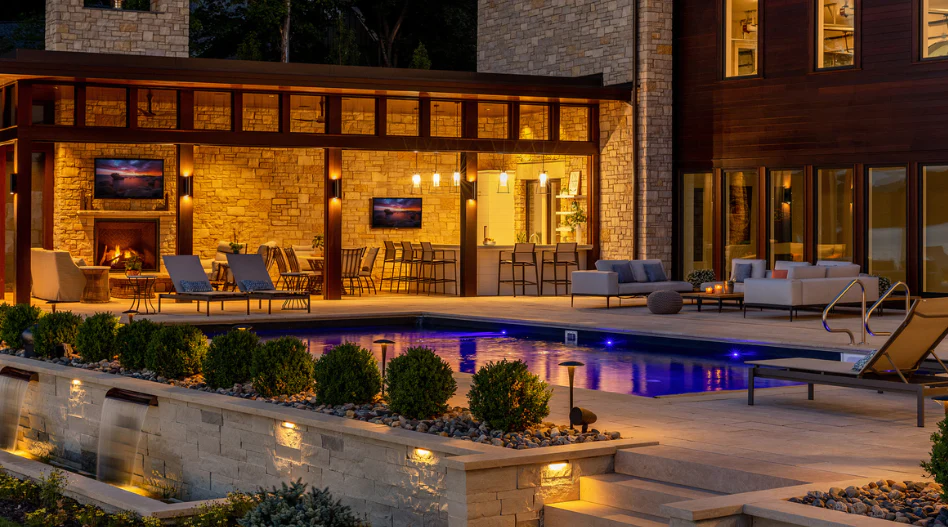
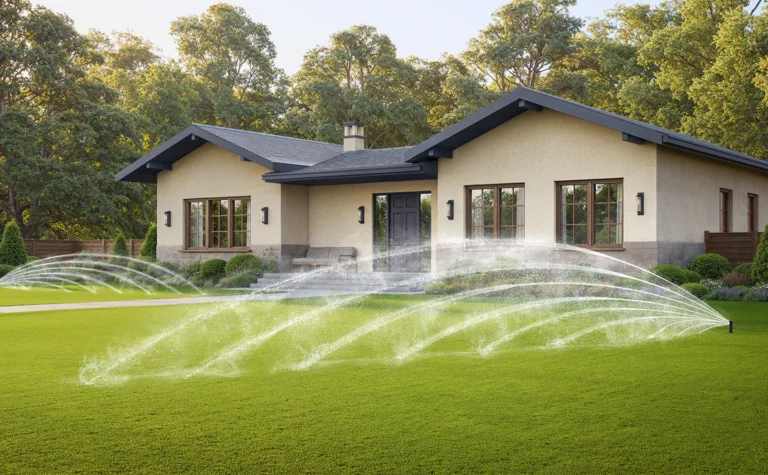
The distinction between a hobbyist setup and a professional-grade pillar installation lies in the sophistication of the logic layers. While a basic plan might allow a user to turn on the sprinklers from a smartphone, an advanced automated plan utilizes soil moisture sensor arrays and evapotranspiration (ET) data to decide if it should water, for how long, and at what time of day to minimize evaporation loss. This level of “Decision Autonomy” ensures the landscape is a proactive asset rather than a fragmented liability.
Furthermore, a professional-grade plan prioritizes “Local-First” logic. Many consumer-grade outdoor gadgets are entirely dependent on a cloud connection. If the home’s fiber-optic line is cut, the automation breaks. A high-tier plan ensures that the “Emergency Retract” command for a motorized pergola or the “Security Lockdown” for perimeter gates is processed locally at the edge. This resiliency is the hallmark of a definitive authority asset, providing peace of mind through technical rigor rather than just marketing convenience.
Contextual Background: The Evolution of Exterior Stewardship
The trajectory of outdoor management in the United States has moved through three distinct eras: the Electromechanical, the Connected, and the Predictive. Historically, the Electromechanical era (1950s–1990s) relied on simple rotary clocks and physical relays. These systems were “dumb”; they would water the lawn during a thunderstorm because the clock dictated it. While mechanically robust, they were resource-inefficient and biologically oblivious.
The Connected era (2000s–2010s) introduced the first wave of Wi-Fi controllers and mobile apps. This allowed for remote oversight but introduced “Technical Fragility.” We are now firmly in the Predictive era. Modern systems are characterized by “Biophilic Integration,” where technology mimics natural cycles. We now see lunar-aligned lighting and pulse-irrigation that mirrors a natural rain cycle. The goal of modern automation is no longer to dominate nature, but to facilitate its growth with precision.
Conceptual Frameworks and Mental Models
Navigating the complexities of a multi-zoned autonomous landscape requires specific mental models to ensure long-term utility:
-
The “Wife/Guest Compliance” Test: This is the primary metric for interface success. If a houseguest cannot adjust the patio heater or outdoor music without a tutorial or an app download, the system design has failed. Top-tier plans always maintain intuitive, physical manual overrides.
-
The “Infrastructure-First” Model: Professional installers follow a 70/30 rule: 70% of the budget should be spent on what is invisible (conduit, burial-grade cabling, drainage, and networking) while only 30% goes toward the visible end-nodes.
-
The Circadian Alignment Model: This framework treats outdoor lighting as a biological input. Sophisticated systems automate the transition from high-energy blue light (4000K) during the day to warm, amber tones (2200K) at night to protect the residents’ sleep cycles and local nocturnal wildlife.
Key Categories of Autonomous Landscape Systems
Building a high-performance exterior requires a categorical approach to infrastructure. Each silo must be optimized individually before being integrated into a master controller.
| Category | High-Performance Standard | Technical Driver | Primary Benefit |
| Irrigation | Predictive ET Modeling | Soil Tension Probes | 40%+ Water Savings |
| Lighting | Digital Addressable (DALI/DMX) | RGBW/Tunable White | Aesthetic Flexibility |
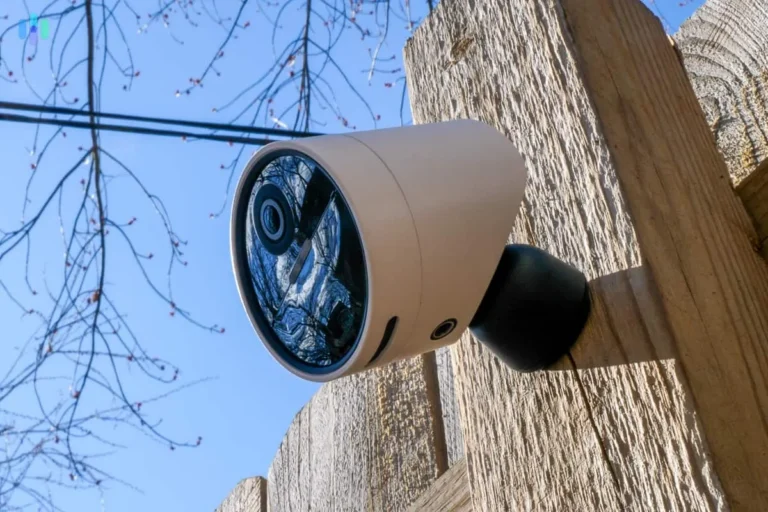
| Security | AI Perimeter Analytics | PoE Thermal Imaging | Zero False Alarms |
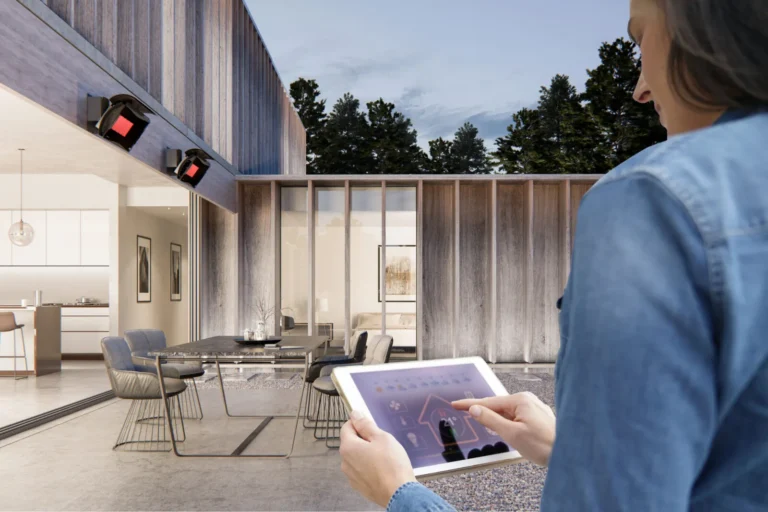
| Climate | Automated Louvered Roofs | Wind/Rain Sensors | 365-Day Usability |
| Maintenance | Robotic Turf Management | RTK-GPS Navigation | Consistent Aesthetic |
| Pool/Spa | Automated Chemistry Dosing | Salt-Cell Integration | Health & Wellness |
Realistic Decision Logic
A critical decision for the homeowner is the choice between “Ecosystem Lock-in” (using one brand for everything) and “Best-of-Breed Integration.” While single-brand ecosystems are easier to set up, they rarely offer the highest quality in every category. The most advanced outdoor automation plans typically employ a “Translator Hub” (like Control4, Savant, or an industrial PLC) to allow professional-grade irrigation to communicate with professional-grade lighting.
Detailed Real-World Scenarios and Geographical Variables
Scenario 1: The High-Wind Atlantic Coast
In environments like the Hamptons or the Outer Banks, “Oxidation Failure” and “Wind Loading” are the primary risks.
-
The Strategy: Utilize marine-grade 316 stainless steel for all fixtures.
-
Automation Focus: Automated louvered roofs must have “Auto-Open” logic for winds exceeding 60mph to prevent the structure from acting as a sail.
-
Failure Mode: Using standard aluminum fixtures which will pit and fail within 24 months in salt air.
Scenario 2: The Arid Southwest (Arizona/Nevada)
The constraint here is “Extreme UV Degradation” and “Thermal Throttling.”
-
The Strategy: All control hubs must be installed in ventilated, shaded enclosures. Cabling must be UV-rated or buried in rigid conduit.
-
Automation Focus: Predictive “Evaporative Cooling” that drops patio temperatures by 20 degrees, but only when humidity levels allow for effective evaporation.
Planning, Cost, and Resource Dynamics
The financial architecture of a professional exterior project is defined by the “Cost of Durability.” Initial investments are high, but the “Avoided Costs” over a ten-year horizon are substantial.
| Project Component | Entry-Level Smart Yard | Professional Automated Plan | ROI Driver |
| Hardscape/Trenching | $1,000 – $3,000 | $10,000 – $40,000 | 25+ Year Lifespan |
| Control System | $200 – $500 | $5,000 – $15,000 | Seamless Experience |
| Sensors/Nodes | $500 – $2,000 | $10,000 – $30,000 | Precision & Reliability |
| Annual Service | $100 (DIY) | $1,200 – $3,000 | Protects Asset Value |
Opportunity Cost: Choosing a cheap, “app-only” device today often prevents the system from being integrated into a “Master Controller” in the future, effectively devaluing the entire home automation investment when the property is eventually sold.
Tools, Strategies, and Support Systems
The backbone of a successful installation relies on several strategic support layers:
-
Matter and Thread Protocols: These 2026-standard protocols allow outdoor sensors to talk to the network without heavy Wi-Fi overhead and with superior range.
-
PoE (Power over Ethernet) Backhaul: The definitive standard for outdoor cameras and high-traffic nodes, providing power and data over a single cable.
-
Low-Voltage Smart Transformers: Allowing traditional, high-quality brass lighting fixtures to be “smart” by controlling the power at the source.
-
Local Weather Stations: Providing ground-truth data that is more accurate than distant airport weather feeds.
-
Sub-Surface Drip Irrigation: Delivering water directly to the roots, eliminating wind-drift and evaporation loss.
Risk Landscape and Failure Modes
High-complexity systems introduce unique risks that must be mitigated during the design phase:
-
Signal Occlusion: As trees grow, they block the radio signals (2.4GHz) of wireless sensors, leading to “Data Gaps” in the security or irrigation logic.
-
The “Cloud-Brick” Risk: Many startups in this space go bankrupt, leaving their hardware useless. Stick to established industrial players (Hunter, Rain Bird, Lutron).
-
Cyber-Landscape Security: Outdoor nodes are physically accessible. They should be on a separate, firewalled network (VLAN) to prevent them from becoming an entry point to the home’s primary data.
Governance, Maintenance, and Long-Term Adaptation
An automated landscape is a biological entity that changes with the seasons and years. Its governance cannot remain static.
Annual “System Hygiene” Checklist:
-
Quarterly: Check all irrigation heads for “Clog Triggers” caused by mineral buildup.
-
Biannually: Test the “Manual Override” for every automated gate and motorized louvered roof.
-
Annually: Re-calibrate soil moisture sensors to account for mineral drift in the probes.
-
Documentation: Maintain a “Digital Twin” of the garden—a CAD map showing every wire, sensor, and pipe—essential for any future repairs.
Measurement, Tracking, and Evaluation
True topical authority requires documenting performance through “Ecosystem KPIs”:
-
Leading Indicators: Sensor connectivity uptime and “Schedule Skip” frequency based on weather data.
-
Lagging Indicators: Total water consumption per square foot compared to the regional average.
-
Qualitative Signal: “The Friction Test”—how many times did a resident have to use a manual switch because the automation failed?
Common Misconceptions and Industry Myths
-
“Wireless is always better.” In terms of reliability and data security, wired (PoE) remains the undisputed gold standard for professional plans.
-
“Automation is just for large estates.” Small urban lots actually benefit more from automation because they have less room for error in moisture and light management.
-
“Robotic mowers are just toys.” In 2026, professional RTK-GPS mowers manage up to 5 acres with sub-inch precision, far exceeding human accuracy.
-
“Smart systems are set and forget.” No; they are “Managed Systems.” They require a human steward to review data and adjust logic quarterly.
Conclusion
The evolution of exterior automation represents a move toward a more disciplined, resource-conscious way of living. By shifting the burden of maintenance from the human to the machine, we create spaces that are not just more convenient, but more resilient to the environmental challenges of the 21st century. Success in this field requires a blend of editorial judgment—knowing which technologies to include and which to discard—and technical honesty regarding the limits of current hardware. As protocols like Matter stabilize and local AI becomes more sophisticated, the outdoor space will continue to evolve from a managed landscape into a truly sentient environment.